One room that never feels right
In a Camas house, the call is usually about one room: a bonus room over the garage, a west bedroom upstairs, or a converted space the furnace’s ducts barely reach.
Most Camas homes heat with gas, and many were built after 2000 with a furnace sized for the whole house and ducts that favor the main floor. Firlands Portland Mini Splits puts a head in the room that’s wrong, sized to that room, and leaves the furnace to do what it already does well.
Why one head instead of a new furnace
- the furnace still works, and replacing it doesn’t fix a long, leaky duct run
- the problem room gets its own thermostat, so it stops dragging the rest of the house
- one head, one outdoor unit, usually one day on site
A single-zone mini split is the starting point. Two problem rooms can share a multi-zone outdoor unit.
Project
Inside a Prune Hill bonus room over the garage
The problem
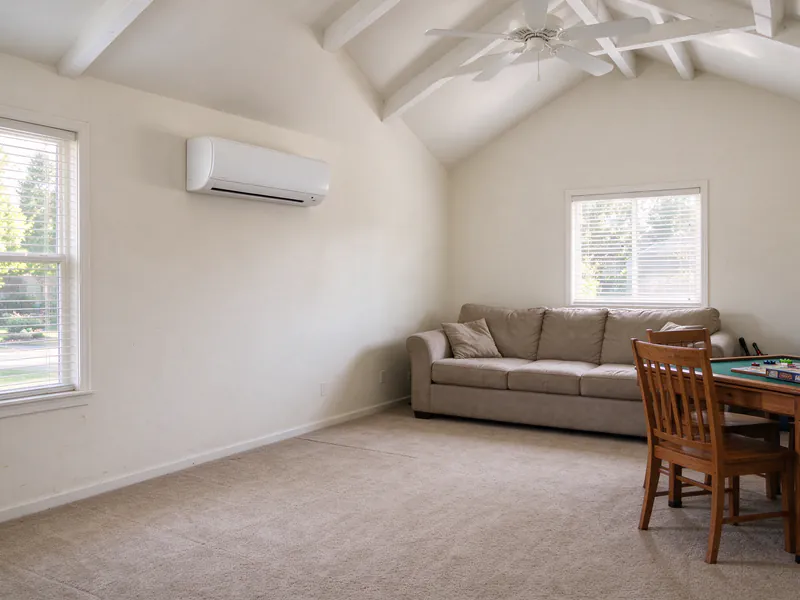
The 15 by 22 foot bonus room over the three-car garage is 10 degrees warmer than the rest of the house on summer afternoons and cold in January. It sits at the end of the longest duct run, over an unheated garage.
The house
Prune Hill houses of this age usually have a gas furnace in the garage or attic and ducts that were never balanced for the room over the garage. This house faces east, with the bonus room's long wall on that side, and Camas sits at the west mouth of the Columbia River Gorge, where winter storms bring a hard east wind.
What we decide, and why
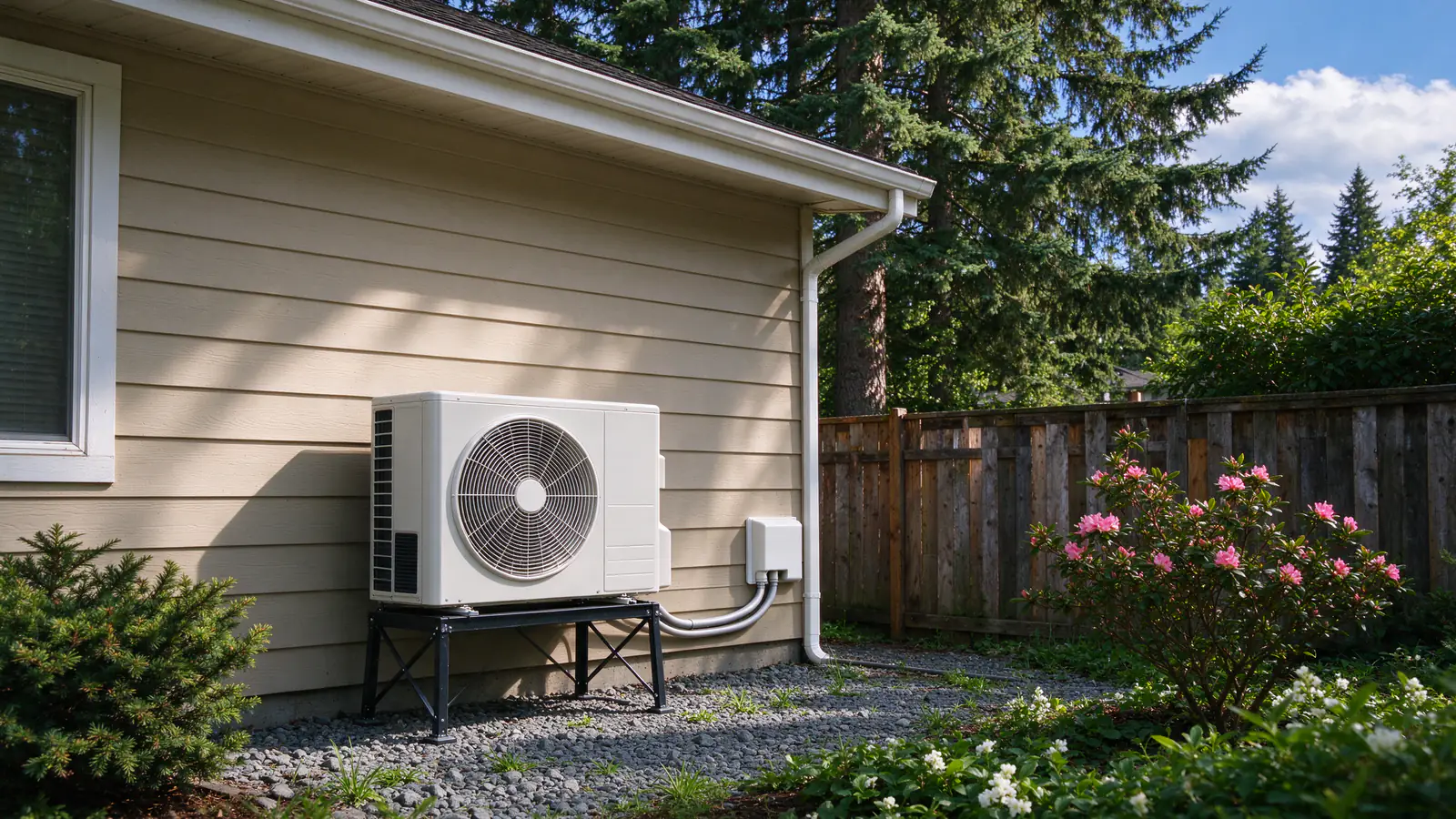
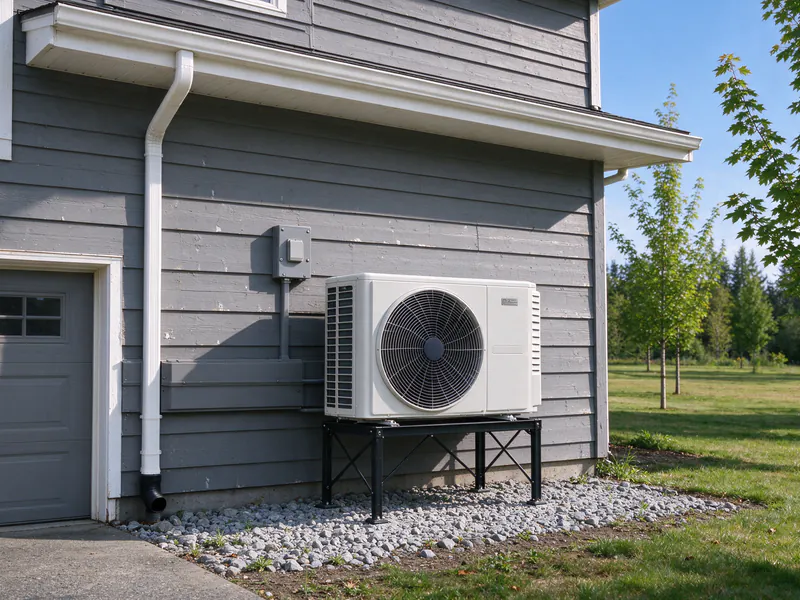
We leave the furnace alone and give the bonus room its own 12,000 BTU head, sized for the west window, the garage ceiling below and the knee-wall attic. The outdoor unit goes on the west side of the garage, away from the east wind, on an 18-inch stand. Because the house heats with gas, the utility's ductless rebate doesn't apply, and we say so on the estimate.
The work
The head mounts on the bonus room's west wall; the line set drops through the garage ceiling inside a closet chase and out through the garage wall in a short painted cover. A 20-amp, 240-volt circuit runs from the garage panel. The line set holds a nitrogen test and a vacuum below 500 microns; the drain falls to daylight and is tested with water.
The City of Camas issues the mechanical permit and charges a fee for each mini split installed; the electrical permit comes from Washington L&I, because Camas doesn't run its own electrical inspections.
What it changes
The bonus room becomes a room people use in July, and the furnace stops running long cycles just to warm the one room it never could.
- Location
- Prune Hill, Camas
- House
- 2004 two-story, gas furnace and central air
- Equipment
- One 12,000 BTU cold-climate wall head and its outdoor unit
- Price
- $6,850, city permit fees included
- Time on site
- 1 day, then the final inspections
Where the Gorge wind changes the plan
Camas sits at the west end of the Columbia River Gorge, and in winter storms the east wind comes straight down the river toward town.
The nearest airport weather station is Troutdale, directly across the river. Over six winters, Troutdale logged 122 days with gusts of 40 mph or more; Portland’s airport logged 40. In the January 2024 storm, Troutdale’s gusts topped 53 mph while the temperature sat in the teens.
What wind does to an outdoor unit
A coil facing that wind packs with ice and blown snow, so the unit defrosts more and heats less. Defrost water that can’t drain freezes into a dam under it. A house with an open east exposure, or one that looks straight up the river, takes it hardest.
How we site it
- the west or north wall, in the lee of the house, even when the east wall is closer
- a stand that lifts the coil 12 to 18 inches above ice and drifting snow
- out of the roof’s drip line, with a clear path for defrost water
That can add ten feet of line set. Mini split placement covers clearances and covers.
Camas permits: city mechanical, state electrical
In Camas, the City of Camas Building Division issues the mechanical permit, and Washington L&I issues the electrical permit for the new circuit.
| Permit | What it covers | Who issues it |
|---|---|---|
| Mechanical | The heat pump, line set and drains | City of Camas Building Division |
| Electrical | The 240-volt circuit and disconnect | Washington L&I |
The city’s fee schedule charges a base mechanical permit fee plus a fee for each mini split, heat pump or air conditioner installed, so a two-head system pays a little more than one. We apply for both permits, book both inspections and close them out with the finals. Fern Prairie addresses outside city limits go to Clark County instead.
Washington rules for the circuit
Every mini split needs its own 240-volt circuit and a disconnect within sight of the outdoor unit, and in Washington the branch circuit from the panel is electrical-contractor work.
The HVAC specialty covers wiring at the equipment; the new circuit from the panel falls under Washington’s electrical contractor rules. Your estimate names who wires it. In many newer Camas houses the panel sits in the garage, which keeps the circuit short. Mini split electrical requirements covers sizes and panel space.
Three kinds of Camas houses
Camas has a newer hillside majority, an older mill-town core and some rural edges, and each one changes the job.
Prune Hill and Grass Valley, 1990s to today
Two-story houses with gas furnaces, central air and a bonus room or third-floor loft. The usual job is one or two heads for the rooms at the end of the duct runs. Line sets can often drop through a garage ceiling or a closet instead of running up the outside wall.
Downtown and the older streets
About one Camas home in ten was built before 1940, mostly near the old downtown and the mill. These houses often have a furnace on the main floor and no ducts upstairs, which suits a head in each upstairs bedroom. In any house built before 1978, we set up lead-safe dust containment before we drill.
Fern Prairie and the rural edge
Larger lots, longer distances to the panel, and some homes on electric baseboards or a heat pump that has seen better days. Where a house heats with permanently installed electric resistance heat, Clark Public Utilities’ $900 ductless rebate can apply.
Cooling as much as heating
Many Camas calls are about summer, not winter, and the heat pump does both from the same head.
The ENERGY STAR cooling design figure for Clark County is 88°F, and a head sized for a hot bonus room handles that easily. In a heat wave far above that, a mini split’s output falls off, so we size west-facing rooms with margin.
Heat in the shoulder seasons
Every head we install is a heat pump, so the same room gets efficient heat in October and April without starting the furnace for the whole house. Mini split sizing explains how we size a room for both seasons.
How a Camas job runs
A Camas job runs the same way as one in Portland, with two permit offices instead of one and a siting check for the east wind.
- Photos and a phone range. Send photos of the room, the outside walls and the panel.
- A visit that measures the room. We check the windows, the insulation, which way the room faces and where the wind hits the house.
- A written estimate. It lists the head and its capacity, the outdoor unit and its stand, the line-set route, the drain, the circuit, the permits, the price and the exclusions.
- Permits, then the install. City mechanical and L&I electrical permits, then a nitrogen pressure test, a vacuum below 500 microns, and a water test of every drain.
- The finals. Both inspections close out, and you get the test readings on paper.
The mini split installation process walks through install day hour by hour.
What Camas jobs cost
Firlands’ typical range for one head is $4,000 to $8,500, and for two heads on one outdoor unit $6,500 to $12,000.
What moves the price
- a sheltered west-side outdoor unit that needs a longer line set
- a line set that has to climb two stories outside
- a head that can’t drain by gravity and needs a pump
- a panel without room for one more 240-volt circuit
The cost estimator gives a quick range, and single-zone vs multi-zone helps when two rooms need help. For a whole-house decision, mini split vs central heat pump lays out the trade-off.