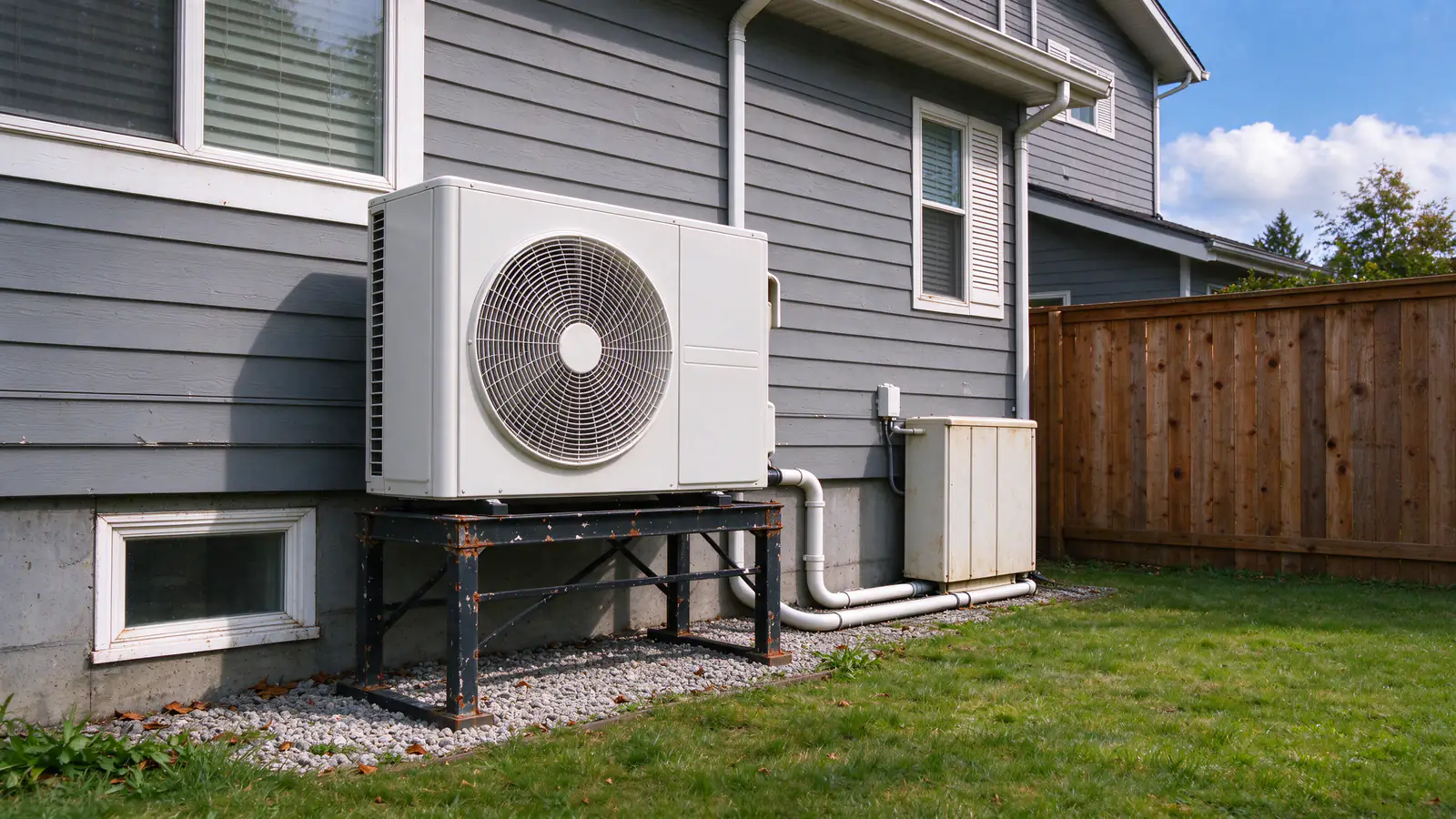
An older head that isn’t keeping up
If you’re in Salmon Creek and your ductless system blows lukewarm on a cold morning, it’s probably older than you think, and the real question is repair or replace.
If your house heats with baseboards and added a head in the living room years ago, you’re weighing a fix against a new unit. Firlands Portland Mini Splits looks at what’s failing, prices the repair and the replacement side by side, and reuses whatever of the old install still tests sound.
Project
Inside a Salmon Creek mini split replacement
The problem
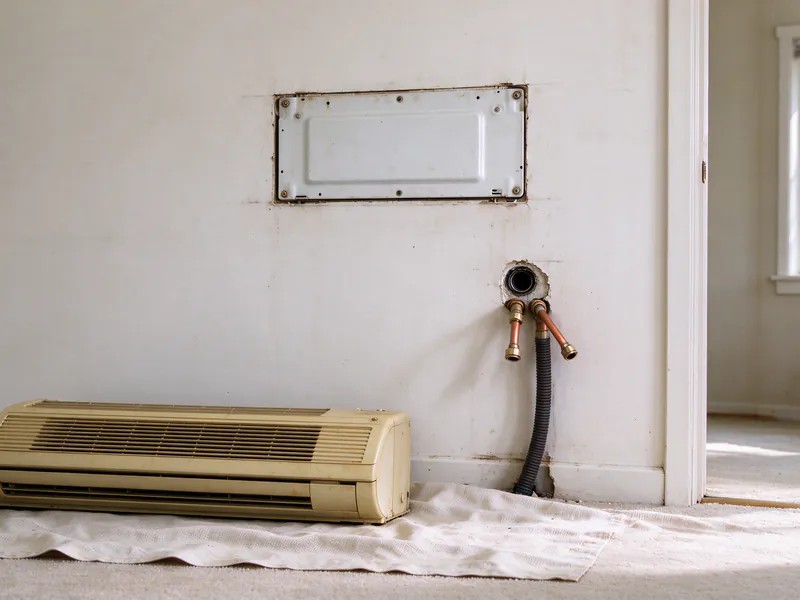
The 15-year-old ductless system in the living room blows lukewarm air on cold mornings, and a repair estimate for the compressor is close to the price of a new system.
The house
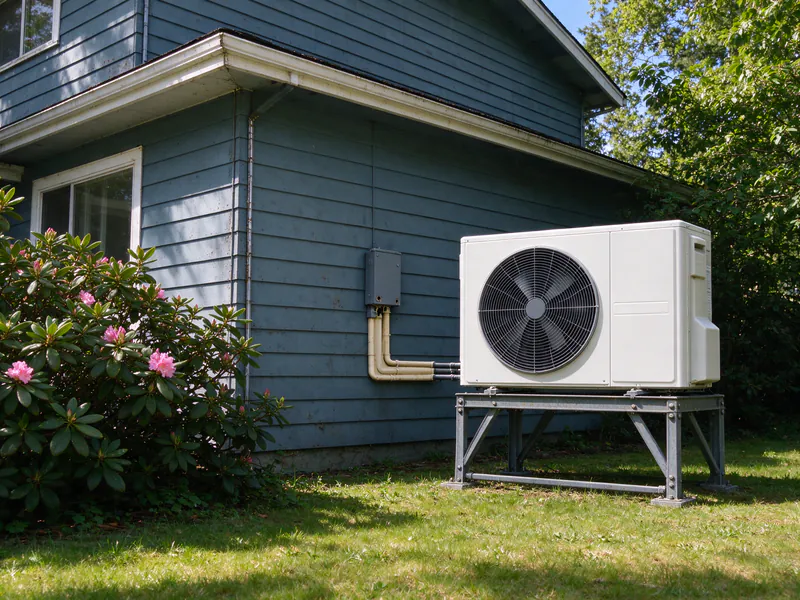
The original line set runs 20 feet inside a wall and down a cover to the outdoor unit; the circuit and disconnect are in good order. The house still has baseboards in the bedrooms.
What we decide, and why
Replace the head and outdoor unit with a current cold-climate pair of the same capacity, and reuse the line set only if it passes a nitrogen pressure test and holds a vacuum. It does, and its size matches the new unit's specification, which keeps the wall closed.
The work
We recover the old refrigerant, flush and re-flare the line set ends, mount the new head on the old bracket location so the wall hole lines up, and set the new outdoor unit on the existing stand after checking its bolts. Nitrogen test, vacuum below 500 microns held, refrigerant weighed in for the line length.
Clark County handles a one-for-one heat pump replacement under its Limited Trade Permit, which is simpler than a new-install mechanical permit. The utility's ductless rebate is one per home, so a house that claimed it for the first system usually can't claim it again; we check.
What it changes
The living room heats well on cold mornings again, the wall stays untouched, and the job is done in a day.
- Location
- Salmon Creek, unincorporated Clark County
- House
- 1987 two-story with a 2010 single-zone ductless system and baseboards
- Equipment
- One 15,000 BTU cold-climate wall head and its outdoor unit, on the existing line set
- Price
- $5,600, permit fees included
- Time on site
- 1 day, then the final inspection
Repair or replace
The deciding factors are the unit’s age, what’s broken, and whether the new equipment would heat noticeably better in the cold.
| What failed | Usually |
|---|---|
| Clogged drain, dirty coil, sensor | Repair; most repairs run $150 to $1,000 |
| Fan motor or control board on a younger unit | Repair |
| Refrigerant leak | Find and fix, $300 to $1,500 and up, if the unit is worth it |
| Compressor on a unit 12 or more years old | Usually replace; a compressor runs $1,200 to $2,800 and up |
Those are Firlands’ typical ranges. A new cold-climate unit also heats better below freezing than many older models did. Mini split repair and mini split replacement go deeper.
What can be reused
A replacement goes faster and costs less when the old line set, the circuit and the stand can stay.
The line set
It has to match the new unit’s specified sizes and length limits, pass a nitrogen pressure test and hold a vacuum below 500 microns. If it passes, we re-flare the ends and reuse it; the wall stays closed.
The circuit and disconnect
If the new outdoor unit needs the same breaker size and the wiring is in good order, it stays. A larger unit may need a new circuit.
The stand and the head location
We check the stand’s bolts and height above ice. Mounting the new head where the old one was keeps the wall hole lined up.
Signs the old system is on its way out
Some symptoms point to a simple fix; others mean the unit is near the end. Here’s how we read them.
- Lukewarm air on cold mornings, fine in the afternoon. Often low refrigerant or a weak compressor; a leak search tells which.
- Water dripping from the head. Usually a blocked drain or a dirty coil, a cleaning job rather than a replacement; our condensate drain guide explains why.
- The outdoor unit iced solid and not clearing. A defrost sensor or control fault, or a unit sitting where defrost water can’t escape.
- Error codes after a power outage. Sometimes a board, sometimes a reset.
- A loud outdoor unit that used to be quiet. Fan motor or compressor wear.
We diagnose before we quote a replacement, so you aren’t sold a new system for a clogged drain.
Replacement day
A like-for-like swap with a reusable line set is usually one day on site.
- We recover the old refrigerant and take out the old head and outdoor unit.
- The line set gets its nitrogen pressure test; if it passes, we re-flare the ends.
- The new head goes on the old bracket location, and the new outdoor unit on the existing stand after a bolt check.
- A vacuum below 500 microns has to hold, then the refrigerant is weighed in for the line length.
- Startup, a drain test with water, and the readings on paper.
The county’s Limited Trade Permit
Salmon Creek is unincorporated Clark County, and the county has a simpler permit for one-for-one equipment swaps.
- Limited Trade Permit. For replacing one piece of equipment, such as a heat pump, in the same place.
- Mechanical permit. For a new location, added heads, new lines or a whole new system.
- Electrical permit. From Washington L&I whenever the circuit changes, since Clark County doesn’t issue electrical permits.
Permit fees are in our price, and we close each permit with its final inspection.
A first system for a baseboard house
Not every Salmon Creek house has a head yet, and many still heat entirely with baseboards.
Two out of every five homes here went up in the 1980s and 1990s, and close to 60% heat with electricity.
The usual first plan
For a first system, sized with a room-by-room load check, the usual plan is a head in the living space and one in the primary bedroom on a multi-zone outdoor unit, with baseboards left in small rooms. Baseboard to mini split covers the conversion.
The rebate on a first system
Clark Public Utilities pays $900 once per home when a new ductless heat pump replaces permanently installed electric heat in an owner-occupied house, installed by a contractor in its network. A house that already claimed it for an older system usually can’t claim it again.
Cold-weather performance, then and now
Many older ductless units weren’t built for cold-climate duty; current cold-climate models hold more of their output in the 20s and teens, which matters in a Clark County cold snap.
We size to the county’s 28°F design low at Pearson Field and check each new unit’s published output in the teens. If your old system struggled every January, that’s often why, and a like-for-like swap to a cold-climate model fixes it. Do mini splits work in cold weather? explains the ratings.
Keeping the new one healthy
Many mini split problems start small: a dirty filter, a blocked drain or a coil choked with dust.
- rinse the head’s filters every month or two in heating season
- keep the outdoor unit clear of leaves, snow and shrubs
- book a cleaning and maintenance visit once a year
What it costs in Salmon Creek
Firlands’ typical range for a like-for-like single-zone replacement is $4,000 to $8,000; replacements needing new lines, a new location or several heads run $8,000 to $18,000 and up.
A new first system runs $4,000 to $8,500 for one head and $6,500 to $12,000 for two. The written estimate says what’s reused, what’s new, the permit and the exclusions. The installation process shows what happens on install day.