Electric heat and a bill that keeps climbing
If your East Portland house heats with baseboards or wall heaters, the January bill is probably why you’re here. Just over half the homes east of I-205 heat with electricity, the highest share of the city’s single-family districts.
Baseboards turn each kilowatt-hour into the same amount of heat. A heat pump moves heat in from outside, so it delivers more than it uses through most of a Portland winter. Firlands Portland Mini Splits starts with the rooms where that saves the most.
The houses east of I-205
Only about 5% of homes here were built before 1940. The rest are postwar ranches, split-levels and 1970s to 1990s infill, plus a lot of duplexes, fourplexes and small apartment buildings, often with:
- baseboard or wall-heater circuits in every room
- a panel in the garage or a hall closet
- an attic that makes wiring runs simple
Project
A typical Powellhurst-Gilbert baseboard conversion
The problem
Baseboard heaters in every room, January electric bills that keep climbing, and no cooling at all for summer.
The house
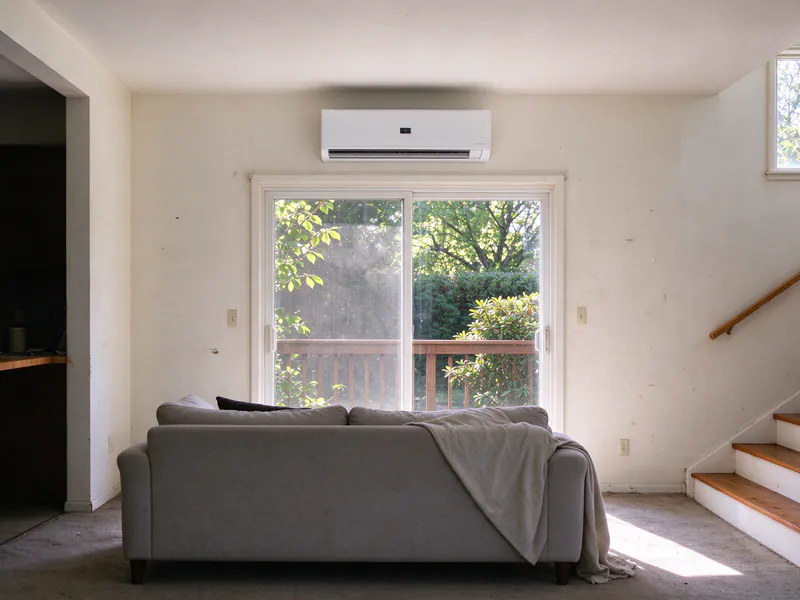
The open living and kitchen space sits on the middle level, the two bedrooms half a flight up, and a small family room half a flight down. The back yard drops toward a patio, and the panel is in the garage on the lower level.
What we decide, and why
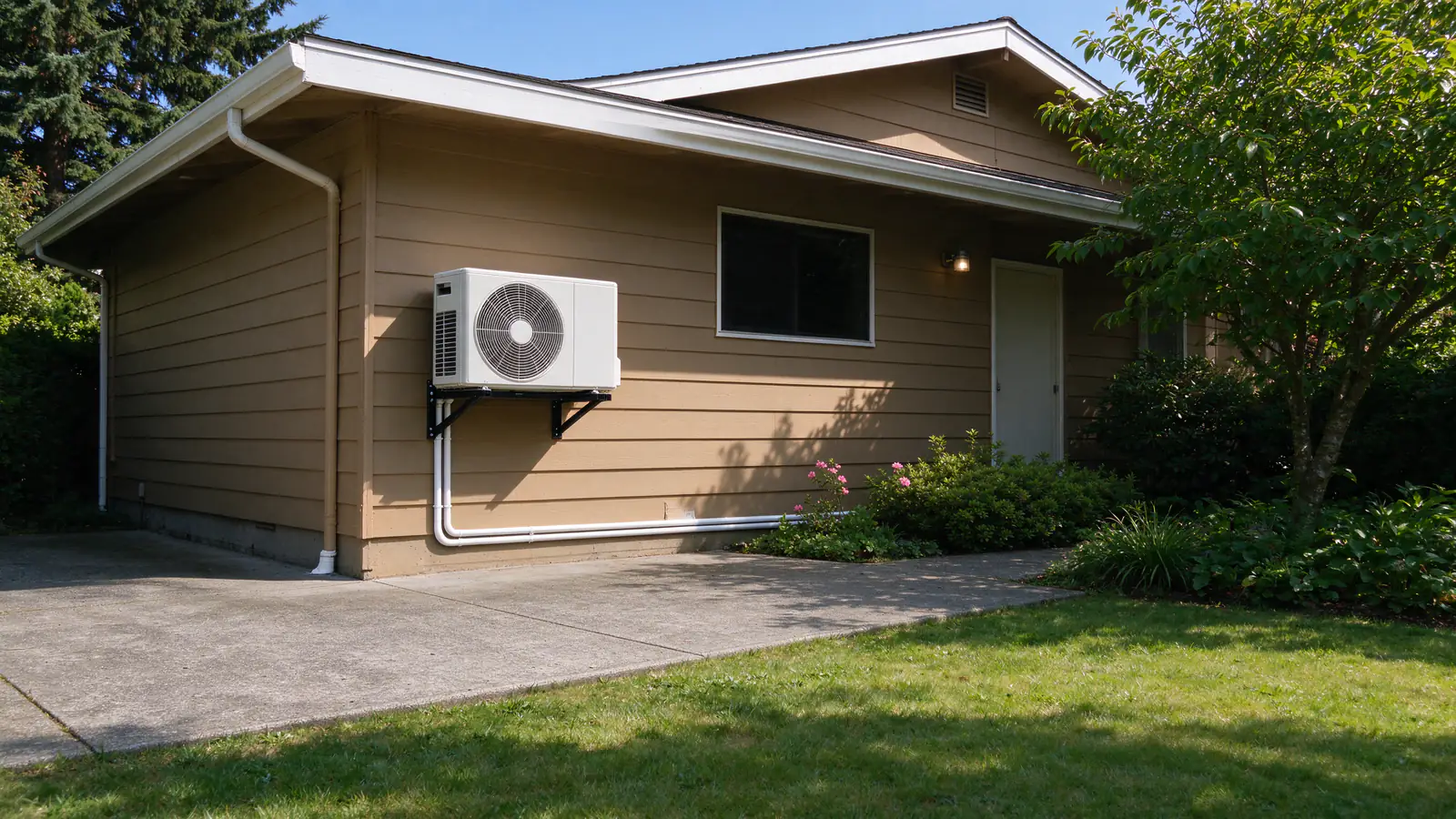
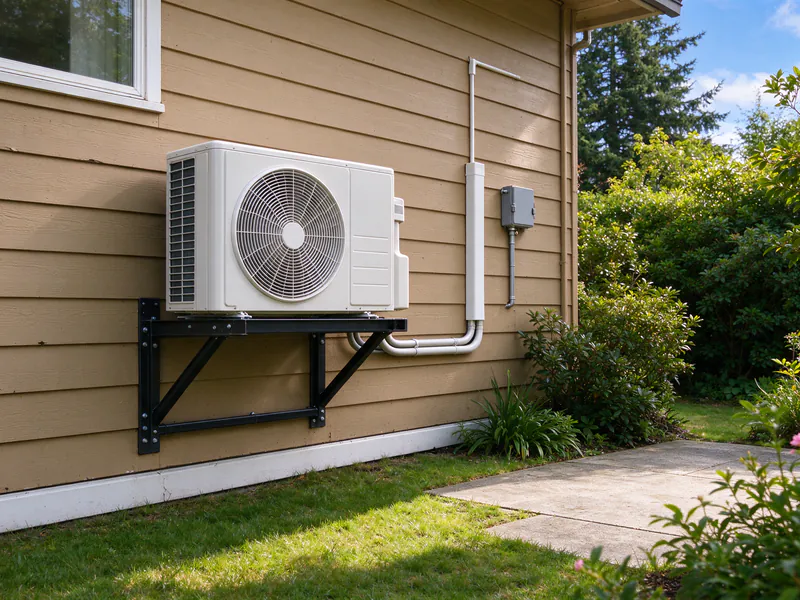
Three heads cover the rooms the family uses most: a 15,000 BTU head in the open living and kitchen space, and a 9,000 in each upper-level bedroom. The small baseboard stays in the bathroom, and the lower family room keeps its baseboards for now. The outdoor unit goes on a wall bracket on the back wall instead of a pad, because the yard falls away there and a pad there sits in the path of water running to the patio.
The work
Three three-inch holes, line sets run in one cover up the back wall, and a 240-volt circuit from the garage panel to a disconnect beside the unit. The baseboard circuits in the living room and both bedrooms come off, which frees the breaker space. The bracket is bolted into framing with rubber isolators so the compressor hum stays out of the bedroom wall. Every line set is pressure-tested and evacuated below 500 microns, and all three heads drain outside by gravity.
The bracket holds the unit high enough to stay above drifting snow and to let defrost water drip clear, which matters on the few winter nights a year Portland drops into the teens.
What it changes
The baseboards come off in the rooms that used the most electricity, the house gets cooling for the first time, and because the heads replace electric resistance heat in the main living space, the owner can apply for Energy Trust's ductless incentive.
- Location
- Powellhurst-Gilbert, East Portland
- House
- 1960s split-level heated entirely by electric baseboards
- Equipment
- Three heads (one 15,000 BTU, two 9,000 BTU) on one cold-climate outdoor unit on a wall bracket
- Price
- $13,400, permits included
- Time on site
- 2 days after permits, then the final inspections
Which rooms come off baseboard first?
We start with the open living space, then the bedroom used most, and leave small rooms on their own heaters until there’s a reason to change them.
Why that order
The living space runs its baseboards the longest, so that’s where a head cuts the bill most. It’s also the room Energy Trust of Oregon’s ductless incentive looks at: the head has to replace electric resistance heat in the main living space.
| Room | Usually gets | Why |
|---|---|---|
| Living and kitchen space | The largest head, 12,000 to 18,000 BTU | Longest heating hours, and it qualifies the incentive |
| Primary bedroom | 9,000 BTU | Used every night, hot in summer |
| Small bedrooms | Baseboard for now, a head later | Low use; the outdoor unit can be sized to add them |
| Bathroom | Keeps its heater | Backup for an ice storm |
How many mini splits do I need? explains when one head can cover two rooms.
What a heat pump does to the bill
Electric resistance heat runs at a coefficient of performance of 1. A cold-climate mini split averages well above that through a Portland heating season, so every room it takes over costs less to heat.
On PGE’s published residential rates, the energy charges add up to about 17 cents a kilowatt-hour before other adjustments. A head running at a COP of 3 delivers three times the heat for that money that a baseboard does.
Where the savings shrink
Colder nights cut the COP, which is why we size heads at Multnomah County’s 24°F design low and check their output below it. Mini split electric bill has the arithmetic.
Duplexes, fourplexes and small apartment buildings
East Portland had 103 commercial and multifamily mini split permits over three years, second only to Southeast. Where you own a plex, each unit is its own job.
How we set up a plex
- one head and one outdoor unit per unit, on that unit’s own meter and panel
- outdoor units on wall brackets along the back, out of shared walkways
- the Energy Trust application at the rental rate of $1,800 per qualifying home, signed by the contractor
If you live in one unit and rent the others, each unit is a separate decision. Mini split for rental property covers access and scheduling around the people living there.
An old electric furnace with ducts
Some East Portland ranches heat with an electric furnace and ducts instead of baseboards. The heat costs the same per kilowatt-hour, but the answer is different.
Ducted or ductless
If the ducts are sound and reach every room, a ducted heat pump on the existing ducts may be the simpler swap, and mini split vs a central heat pump compares the two.
If the ducts are leaky, crushed in the crawlspace or missing from an addition, we look at a ducted mini split for part of the house or heads in the main rooms. Energy Trust’s offers differ for each path, so we say which one your house fits before you choose.
Ice storms and backup heat
East Portland gets the ice storms that come down the Gorge, and power cuts come with them. A heat pump does nothing without power, but neither do baseboards.
What we plan for is the cold night with the power on. A cold-climate unit sized at the design low keeps working into the teens; Troutdale reached 14°F on January 13, 2024. Leaving one baseboard wired in a bathroom or back bedroom gives a second source if a head needs service in the middle of a cold snap.
Permits from the City of Portland
All of East Portland is inside the city, so the City of Portland issues the mechanical and electrical permits, even out past 162nd Avenue.
A typical single-zone install pays about $187 to $382 in city fees with the state surcharge, and multi-zone jobs pay more. The fees are in our price. We schedule the inspections, hand over the test readings on paper, and close the permits with the final.
East-county wind on the outdoor unit
The farther east you go, the closer you get to the Columbia River Gorge, and to the winter east wind that comes out of it.
Troutdale’s airport, just past the city line, logged far more winter days with 40 mph gusts than Portland’s airport over the last six winters. In Hazelwood, Wilkes and Russell we keep outdoor units off east-facing walls where we can, and set them on a bracket or stand high enough for defrost water to drain. Mini split placement explains the rest.
Prices for an East Portland house
Firlands’ typical range runs from $4,000 to $8,500 for one head to $15,000 to $30,000 and up for a whole-house system with five heads or more.
Two heads on one outdoor unit typically cost $6,500 to $12,000, and three or four $9,000 to $18,000 and up. Freeing breaker space by removing baseboard circuits often avoids a panel upgrade. Mini split rebates in Oregon lists the incentive conditions.
Lents to Parkrose
Each part of East Portland tends toward its own kind of job.
- Lents and Powellhurst-Gilbert. 1950s and 1960s ranches and split-levels on baseboards, where two or three heads do most of the work.
- Mill Park, Hazelwood and Centennial. Plexes and small apartment buildings, converted one unit at a time; larger buildings go through commercial mini split installation.
- Parkrose and Russell. Postwar ranches on the Pacific Power side, often a whole-house system when the old electric furnace fails.