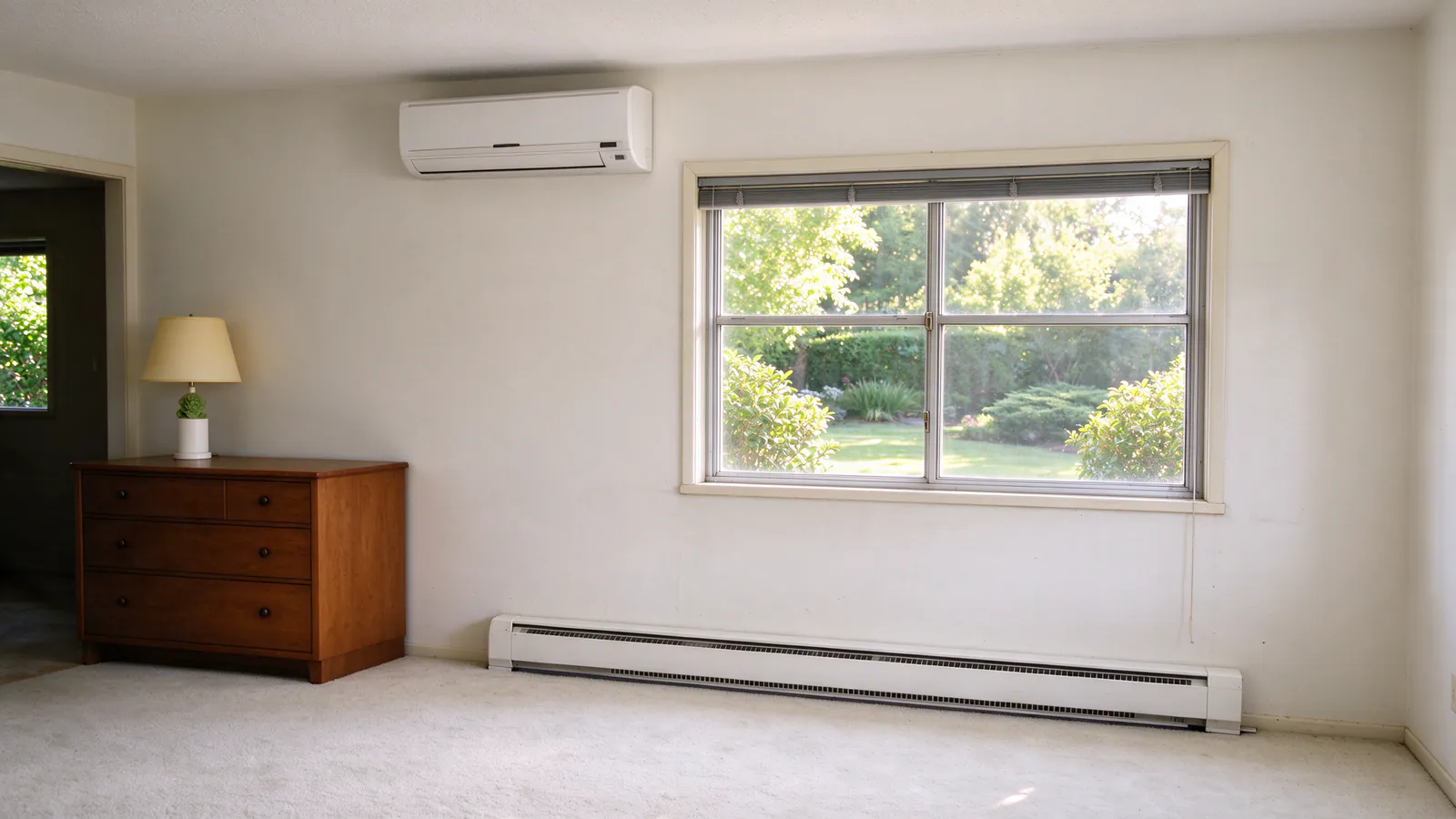
If your house heats with baseboards or wall heaters, a mini split can lower your heating bill, and someone may help pay for it. At Firlands Portland Mini Splits we check which programs fit your address and your layout before you sign, so the incentive shapes the plan instead of surprising you afterward.
The short list
Which program applies depends on your electric utility, what heats your house today, and who lives there.
| Program | Amount | Who it’s for |
|---|---|---|
| Energy Trust of Oregon, ductless heat pump | $800 for a typical owner-occupied house | PGE and Pacific Power customers replacing electric resistance heat |
| Energy Trust, higher tier | $1,800 | Rentals, owner-occupied duplexes to fourplexes and townhomes, income-qualified households |
| Clark Public Utilities, ductless heat pump | $900 | Vancouver and Clark County homes with permanent electric resistance heat |
| City of Portland, Energy Friendly Homes | No-cost or low-cost upgrades | Income-qualified households inside Portland city limits |
| Oregon Department of Energy programs | Varies by program and funding round | Set by each program; see below |
| Federal 25C tax credit | Ended | Covered systems placed in service through December 31, 2025 |
Energy Trust of Oregon’s ductless offer
This is the incentive most Portland-area mini split jobs use. It’s paid by Energy Trust, which serves PGE and Pacific Power customers in Oregon.
What it pays
- $800 for a typical owner-occupied single-family or manufactured home
- $1,800 for any rental, for an owner-occupied duplex, triplex, fourplex or townhome, and for income-qualified households through Energy Trust’s Savings Within Reach tier
- Energy Trust runs promotions from time to time, such as higher amounts for manufactured homes through participating contractors, and we check what’s running for your home
Who qualifies
The rules shape the design, so we read them before we lay out heads:
- Your electricity comes from PGE or Pacific Power. PGE and Pacific Power deliver their heat pump incentives through Energy Trust rather than running their own ductless rebate.
- The system replaces electric resistance heat (baseboards, wall heaters or ceiling cable) in the main living space. Gas-heated homes don’t qualify for this offer.
- The largest head goes in the main living space. A layout with heads only in the bedrooms won’t meet the rule (how many heads?).
- The heat pump rates at least 8.1 HSPF2, its seasonal heating efficiency. For heads that heat, we choose cold-climate models that clear it easily.
How you apply
You apply within 60 days of installation, and the installing contractor signs the application. Processing usually takes several weeks. On our jobs we sign it and hand you the model numbers, ratings and invoice detail it needs.
Vancouver and Clark County
Clark Public Utilities, not Energy Trust, serves Vancouver and Clark County, and its ductless heat pump rebate is $900.
- The house: owner-occupied, heated by permanently installed electric resistance heat such as baseboards, wall heaters, ceiling cable or an electric furnace.
- The equipment: a new heat pump rated at least 7.5 HSPF2, single-head or multi-head.
- The installer: a contractor in the utility’s contractor network, working under Washington licensing. Self-installs don’t qualify.
- The limit: one rebate per home.
Our Vancouver and Clark County work is done by contractors in that network, so the rebate stays open to you. See mini splits in Vancouver.
State programs
The Oregon Department of Energy runs heat pump programs that open, fill and close as their funding allows. When one is open, it can add a lot to Energy Trust’s amount.
- Oregon Heat Pump Purchase Program: $2,000 per heat pump in the round’s eligible homes, for systems rated at least 8.1 HSPF2 and 16 SEER2, applied for by an approved contractor.
- Community Heat Pump Deployment Program: larger amounts for owner-occupied homes, run region by region, with grants for related work such as panel upgrades.
- Oregon Rental Home Heat Pump Program: for rental homes, reserved and paid through approved contractors.
- Home Energy Rebates (HEAR and HOMES): federally funded rebates for low- and moderate-income households, run by the state.
Each program sets its own rounds, and most cap the combined incentives so they can’t exceed the cost of the job. We check which programs are taking applications for your address before you sign, and we don’t count on one that isn’t. Permits are a separate cost, and we include them (permit guide).
City of Portland: Energy Friendly Homes
Energy Friendly Homes is the City of Portland’s program, funded by the Portland Clean Energy Community Benefits Fund, for income-qualified homeowners inside city limits.
It provides no-cost or low-cost upgrades, including ducted or ductless heat pumps, for households below 150% of the area median income. The work goes through the program’s own participating contractors, starting with an energy assessment, so you apply to the program directly rather than through us. If you might qualify, apply there first.
The federal tax credit has ended
The federal Energy Efficient Home Improvement Credit (25C) paid up to $2,000 a year toward a qualifying heat pump. It covered systems placed in service through December 31, 2025.
A mini split installed after that date doesn’t qualify. If you see the credit on an older quote or website, leave it out of your budget.
Utilities outside the big two
Energy Trust’s electric incentives cover PGE and Pacific Power customers in Oregon. If your power comes from a city-owned or people’s utility, they don’t apply.
| Your electric utility | Where to look |
|---|---|
| PGE or Pacific Power (most of Portland and the Oregon suburbs) | Energy Trust of Oregon |
| Clark Public Utilities (Vancouver, Clark County) | Clark Public Utilities |
| A city or people’s utility elsewhere on the metro edge | That utility’s own programs |
How incentives change the plan
An incentive is worth designing for when it fits the house, and not worth bending the house to fit when it doesn’t.
Where it pays to design for it
A baseboard-to-mini-split job in a ranch or split-level fits Energy Trust’s rules well: the biggest head goes in the living room, the bedrooms get small ones, and the baseboards stay as backup. A larger house may need a whole-house layout with two outdoor units.
Where it doesn’t fit
A gas-heated house adding heads upstairs for cooling won’t qualify, and neither will a layout built around one attic bedroom. Plan those on comfort and cost (installation cost), and count the lower electric bill (electric bill guide) as the payback instead.
Call us with your utility and what heats each room, and we’ll tell you which incentives your house can use.