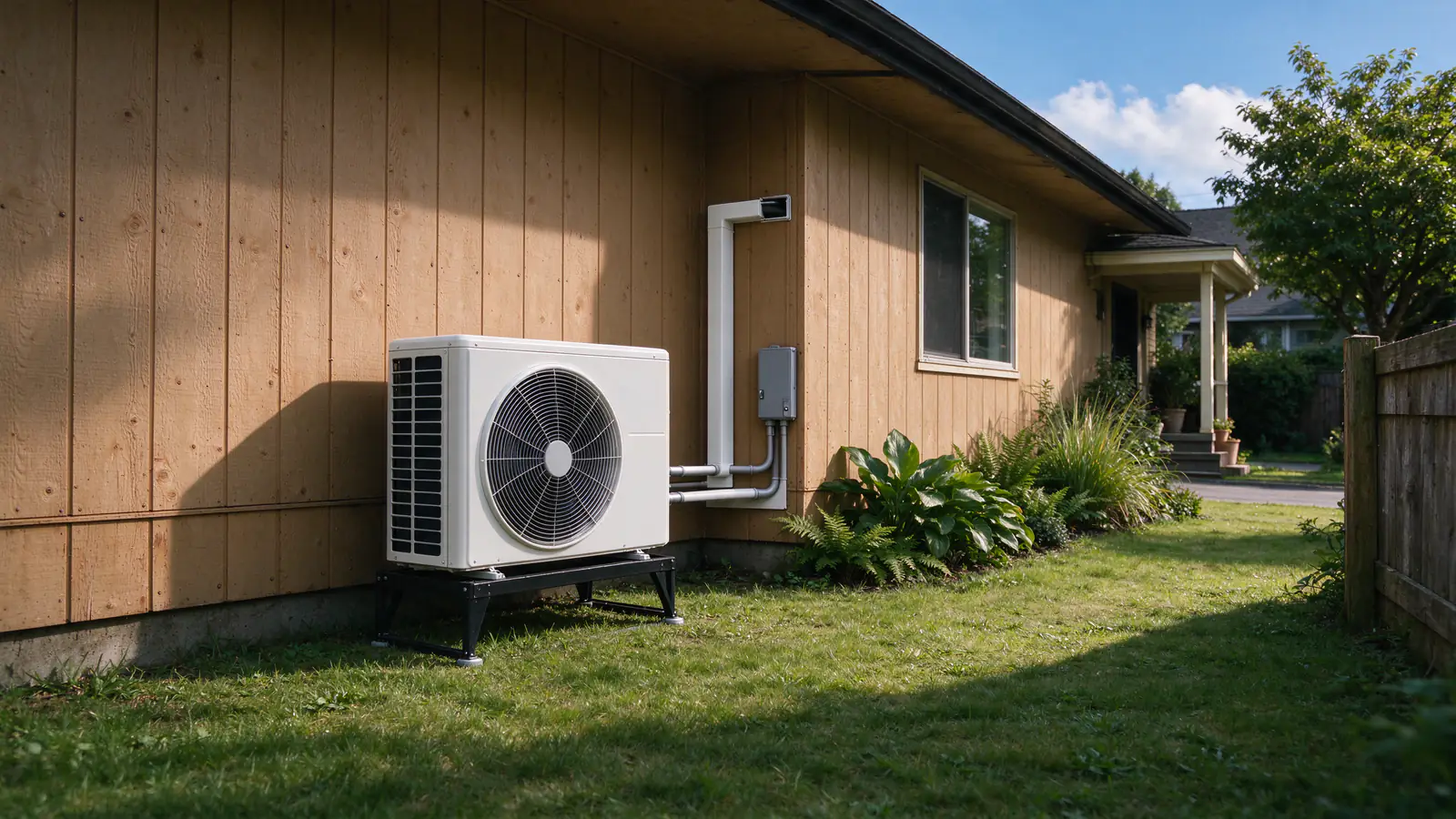
Gresham houses, and what they need
Most Gresham houses are single-level ranches, split-levels and two-story houses from the 1960s on, and many never had ductwork.
The median house in Gresham was built around 1981. More than half of Gresham homes heat with electricity, usually baseboards or wall heaters, so the winter bill is the first thing people mention when they call Firlands Portland Mini Splits.
Why they’re good mini split houses
That makes many Gresham houses straightforward mini split jobs:
- plenty of outside wall for the heads, so line sets run straight through
- an open attic for wiring, and often a crawlspace
- baseboard circuits that free breaker space when they come off
The decisions are which rooms get heads first, and where the outdoor unit goes. Baseboard to mini split covers the conversion itself.
Project
Inside a North Gresham ranch, sited for the east wind
The problem
Baseboards in every room, a January electric bill that kept climbing, and no cooling at all. The east side of the house takes the full gorge wind in winter storms.
The house
The open living room and kitchen run along the back of the house; the primary bedroom is at the west end. North Gresham sits in the path of the east wind that comes out of the Columbia River Gorge, and the City of Gresham issues the permits here, not Portland.
What we decide, and why
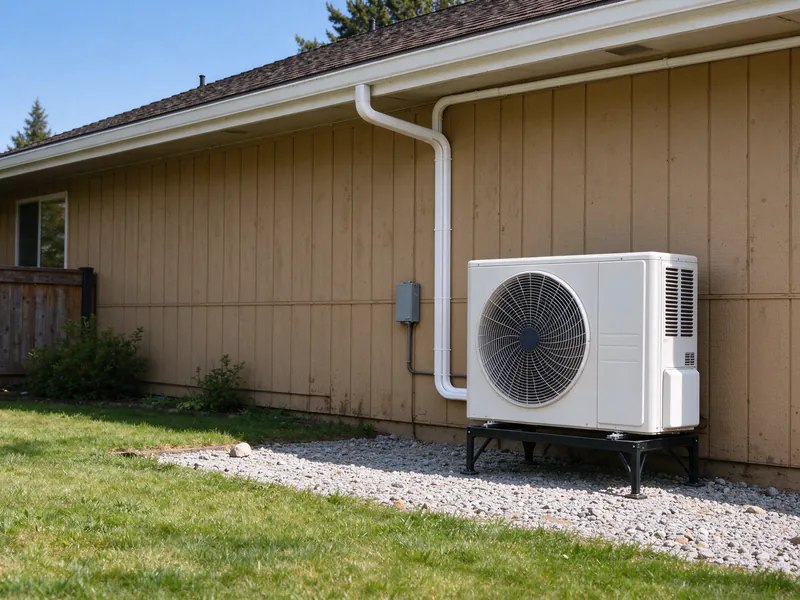
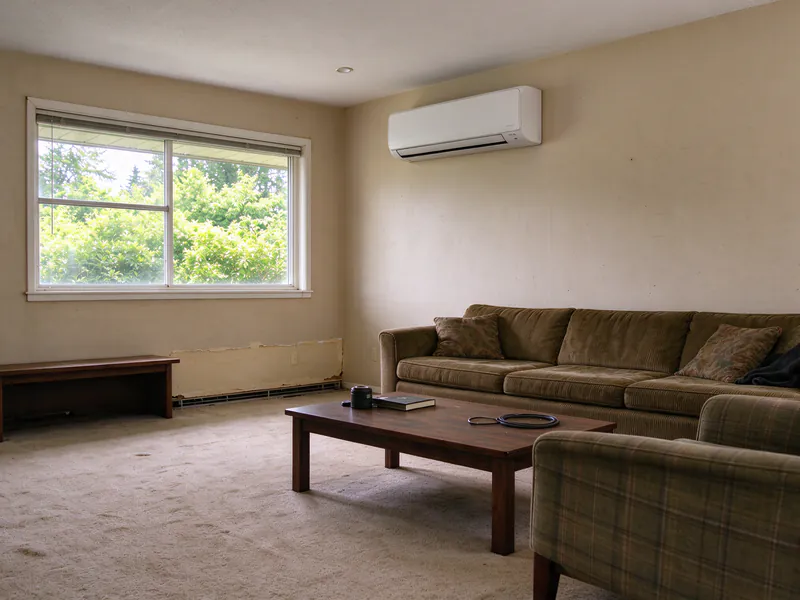
Two heads cover the rooms the family uses most: a 15,000 BTU head in the living room and a 9,000 in the primary bedroom. The two small bedrooms keep their baseboards for now. The outdoor unit goes on the west wall, out of the east wind, on an 18-inch stand so ice and drifting snow can't block the coil and defrost water can drain away.
The work
Two three-inch holes, two line sets run along the eave line in one cover to the west wall, and a 20-amp, 240-volt circuit with a disconnect within sight of the unit. The baseboard circuits in the living room and the primary bedroom come off, which frees breaker space. Both line sets are pressure-tested with nitrogen and evacuated below 500 microns, one at a time. Both heads drain outside by gravity.
Putting the unit on the sheltered wall costs about ten more feet of line set, and it keeps the coil out of the wind that packs ice into it during a gorge storm.
What it changes
Baseboard heat comes off in the rooms that use the most of it, the house gets cooling for the first time, and because the heads replace electric resistance heat in the main living space, the owner can apply for Energy Trust's ductless incentive.
- Location
- North Gresham
- House
- 1972 single-level ranch, about 1,350 square feet, electric baseboard heat
- Equipment
- Two heads (15,000 and 9,000 BTU) on one 18,000 BTU cold-climate outdoor unit
- Price
- $9,650, permits included
- Time on site
- 2 days, then the final inspections
The east wind decides where the outdoor unit goes
Gresham sits at the west mouth of the Columbia River Gorge, and in winter storms the east wind comes straight through.
At the Troutdale airport next door, gusts reached 40 mph or more on 122 winter days over the last six winters. At Portland’s airport it was 40 days. On January 13 and 17, 2024, Troutdale’s gusts topped 53 mph while the temperature sat in the teens.
Why it matters for a heat pump
A coil facing the wind packs with ice and snow, so the unit spends more time defrosting and less time heating. Defrost water that can’t drain freezes into a dam under the unit.
What we do about it
- put the outdoor unit on the sheltered side, usually the west or north wall, even when the east wall is a shorter run
- set it on a stand that lifts the coil above ice and drifting snow, with a clear path for defrost water
- keep it out of the roof’s drip line, where meltwater refreezes on top of it
That can add ten or fifteen feet of line set. It’s cheaper than a unit that can’t keep up in the worst week of the year. Do mini splits work in cold weather? covers the equipment side, and mini split placement the siting.
Choosing equipment for a Gresham winter
We pick outdoor units by their published heating output at low temperatures, sized to each room’s load rather than the square footage.
| Figure | What it means for the equipment |
|---|---|
| 24°F, Multnomah County’s winter design low | The temperature we size the heating to carry |
| 14°F at Troutdale, January 13, 2024 | Colder nights happen; we check output below the design low |
| 53 mph gusts at Troutdale that week | Siting and a stand matter as much as capacity |
If the house has baseboards, we usually leave them wired in rooms without heads, such as a small bathroom. That gives backup heat during an ice storm, and a way to warm a guest room that’s rarely used.
Permits in Gresham
The City of Gresham issues the permits here, not Portland, and a new mini split needs two of them.
| Permit | What it covers | Who applies |
|---|---|---|
| Mechanical | The heat pump and its line set | The contractor, with its CCB number |
| Electrical | The new 240-volt circuit and disconnect | The electrical contractor, under a City of Gresham electrical permit |
We apply, schedule the inspections and close out the job with the final. In unincorporated Multnomah County, or across the line in Troutdale or Fairview, a different office issues the permit, and we sort that out on the first call.
What it costs, and the rebate
Firlands’ typical range for one head is $4,000 to $8,500, and for two heads on one outdoor unit $6,500 to $12,000.
The longer line run
Three or four heads run $9,000 to $18,000 and up. The longer line run that the sheltered wall sometimes needs is on the estimate from the start, not a surprise later. Mini split installation cost in Portland breaks the price down.
Gresham is PGE territory, so Energy Trust of Oregon’s ductless incentive can apply when a ductless system replaces electric resistance heat in the main living space:
- $800 for a single-family home
- $1,800 for rentals, attached homes and income-qualified households
- applied for within 60 days of the install
Mini split rebates in Oregon lists the conditions.
Which rooms get heads first
In most Gresham baseboard houses we start with the living space, then the bedroom used most, and leave small rooms on baseboards.
The living room drives the bill and qualifies the house for Energy Trust’s incentive, so it usually gets the first and largest head. A primary bedroom comes next. Two small bedrooms can share a multi-zone outdoor unit later, if the first one is sized with room for them.
How the house itself changes the work
Ranches, split-levels and two-story houses route their line sets and wiring differently, and that shows up in the estimate.
Single-level ranches
The line sets usually run straight through the wall behind each head and down to a cover along the foundation. The circuit runs through the attic or the crawlspace to the panel, often in the garage. A two-head ranch job is usually two days on site.
Split-levels
Heads on the upper level need a route down past the lower level, often inside a closet or along a corner of the house in one cover. We check the drain fall for each head, because a head on an interior upper-level wall may need a pump.
Two-story houses
A head in each upstairs bedroom means line sets climbing a full story; how many mini splits do I need? explains the count. We look for a stacked closet or an attic route, so one cover runs down the back of the house instead of several down the front.
Rockwood to Gresham Butte
Across Gresham the houses change, and so does the job.
- Rockwood and along Burnside. Smaller ranches and duplexes often need one or two heads and a short line run. Rentals there can use Energy Trust’s higher incentive.
- Gresham Butte and Kelly Creek. Two-story houses on slopes mean longer line-set routes, and outdoor units on stands or brackets where the yard falls away.
- Pleasant Valley. Newer houses with ducts often need only a single-zone head for a bonus room the furnace never reaches.