Cold mornings, hot afternoons
Hillsboro gets colder at night than Portland and about as hot in summer, so a mini split here has to be chosen and placed for both.
Firlands Portland Mini Splits installs ductless systems across Hillsboro, from the older streets around Shute Park to the houses going up in South Hillsboro. Hillsboro’s airport averages about 64 nights a year at or below freezing, close to twice Portland’s count, because cold air settles into the valley on clear, still nights.
What that means for a heat pump
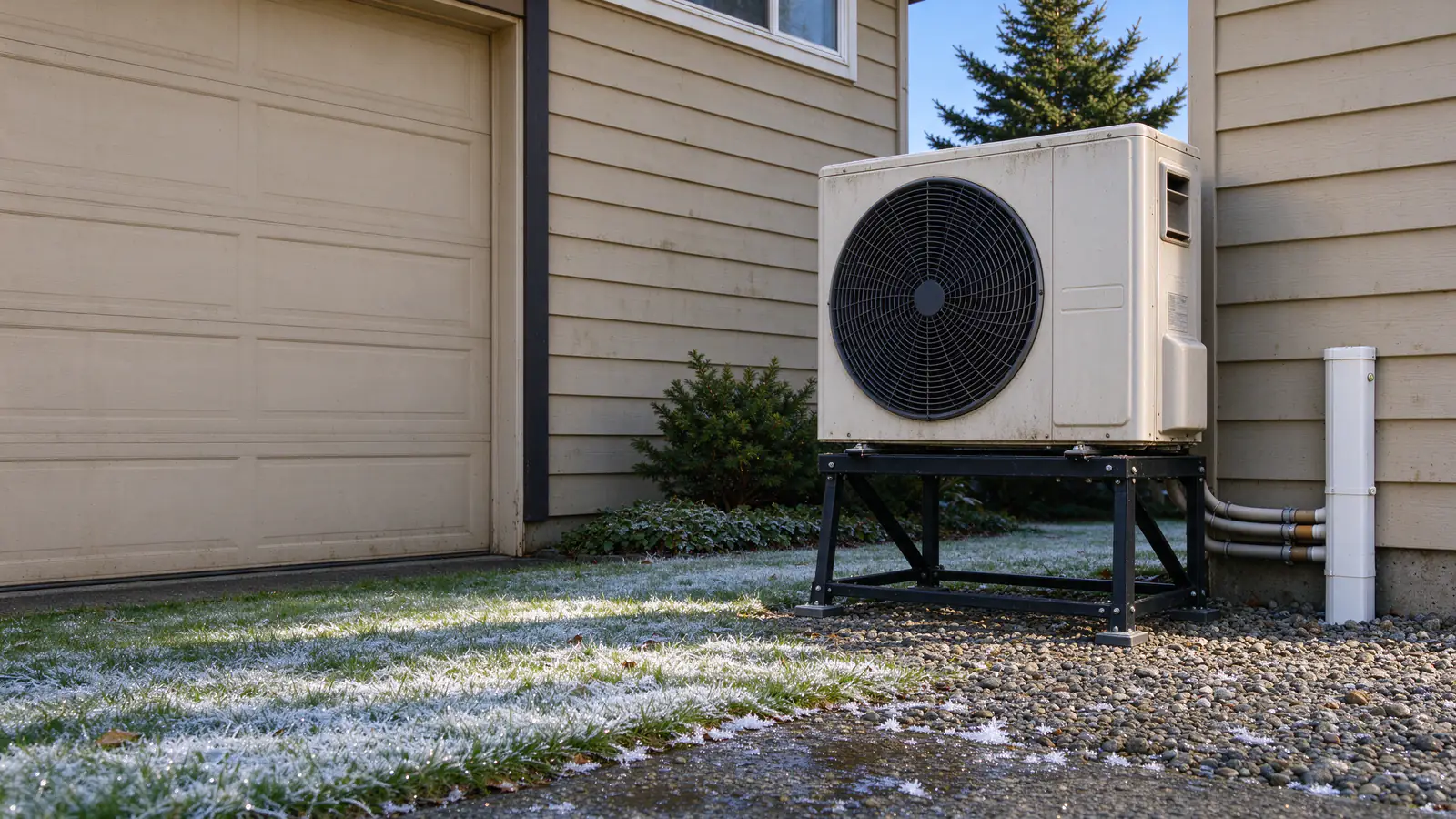
A heat pump’s outdoor coil collects frost on those mornings and runs short defrost cycles to clear it. Each cycle sheds water, and on a 25°F morning that water freezes where it lands. The answer is in the placement, not a bigger unit.
Project
What a bonus-room mini split in Orenco looks like
The problem
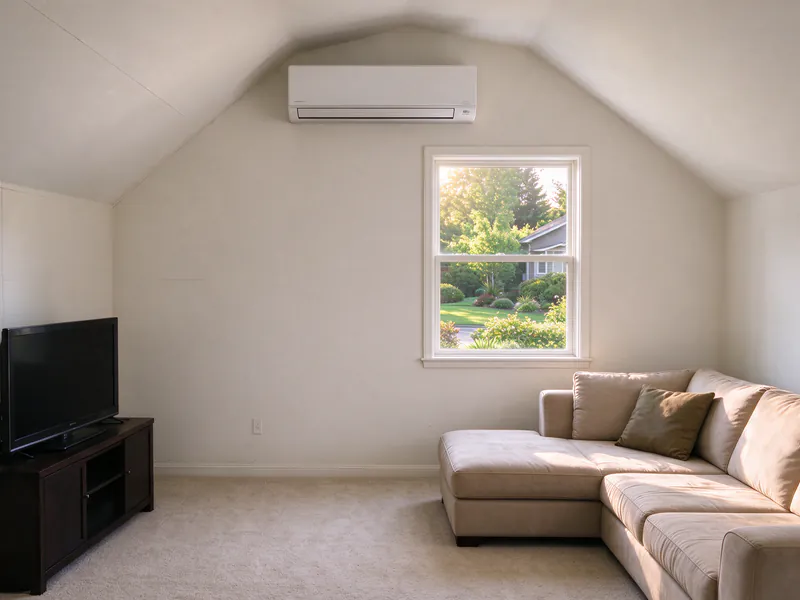
The bonus room over the garage runs ten degrees warmer than the rest of the house in summer and cold on January mornings. The furnace serves it through one long duct across the garage attic, and turning the thermostat down for the bonus room overcools the bedrooms.
The house
The room is 16 by 20 feet with three outside walls and a low ceiling under the roof slope. Hillsboro's frosty mornings matter here: the side yard below the room stays in shade most of the winter, so a unit set on the ground there sits in frost until noon.
What we decide, and why
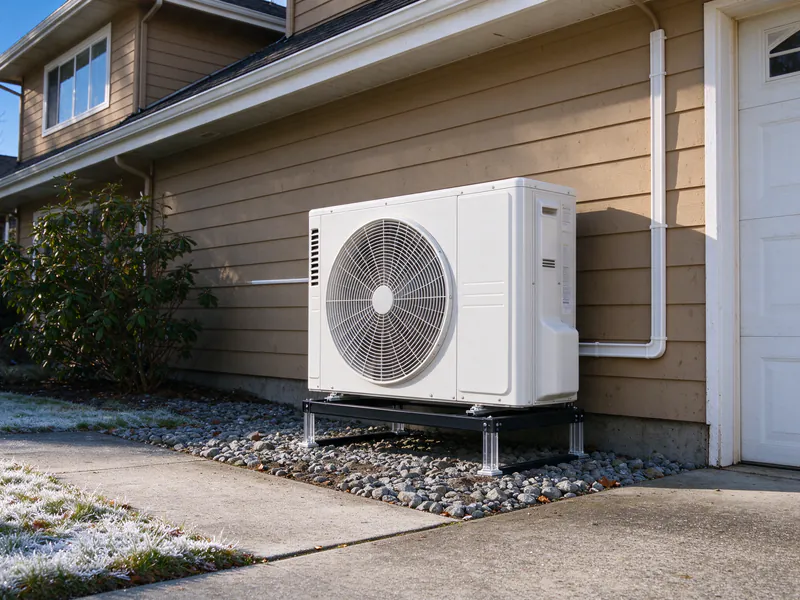
One 12,000 BTU cold-climate head on the gable wall heats and cools the room on its own schedule, and the furnace keeps the rest of the house. We put the outdoor unit on an 18-inch stand on the south side of the garage, out of the shade, with gravel under it for the defrost water. Rebalancing the duct costs less, but it doesn't fix a room with three outside walls over an unheated garage.
The work
We core one hole through the gable wall and run 35 feet of 1/4 by 3/8 inch line set in a cover along the garage wall to the stand. The 20-amp, 240-volt circuit comes from the garage panel ten feet away. The lines hold a nitrogen pressure test, the vacuum goes below 500 microns and holds, and the drain falls by gravity outside the same hole.
The defrost water drains to a gravel bed beside the driveway, not onto the concrete, where it freezes into a sheet on a 25°F morning.
What it changes
The bonus room becomes usable year round, the bedrooms stop overcooling, and the outdoor unit sits where frost clears early and ice can't build under it.
- Location
- Orenco, Hillsboro
- House
- 2004 two-story, about 2,300 square feet, gas furnace with central air
- Equipment
- One 12,000 BTU cold-climate wall head, outdoor unit on an 18-inch stand
- Price
- $7,860, permits included
- Time on site
- 1 day, then the final inspections
Where the outdoor unit goes on a frosty lot
Put it on a stand, in sun if possible, with gravel or open ground below it for the defrost water.
Wind is rarely the problem here: Hillsboro’s airport logged far fewer strong-gust winter days than the Gorge-side stations east of Portland. Frost and standing cold air are. So the siting rules are different from the east side:
- A stand, 12 to 18 inches up. It keeps the coil above frost-heaved ground and the occasional snow, and lets ice fall away instead of building up under the unit.
- The sunny side when we have a choice. A south or west wall clears frost sooner than a north side yard that stays shaded all winter.
- Somewhere for the water. Defrost water goes to gravel or a drain, never onto a driveway, a path or a patio where it freezes.
- Out of the roof drip line. Water from the gutter refreezes on top of a unit placed under it.
Mini split placement covers clearances, and the condensate drain guide covers the indoor side.
Picking equipment for the west side
We size each head from the room’s heat loss at Washington County’s 27°F design low, then check the outdoor unit’s published output well below it.
| West-side figure | What it means for the equipment |
|---|---|
| 27°F, Washington County’s winter design low | The temperature we size the heating to carry |
| 2.9 nights a year at or below 20°F at Hillsboro’s airport | Colder nights happen most winters |
| 13°F, the lowest reading there since late 2020 | We check output well below the design low |
| 114°F on June 28, 2021 | Cooling has to be sized for real heat, too |
The figures come from NOAA’s station records and ENERGY STAR’s design temperature guide. Cold-climate models are rated to keep heating well into the teens. Do mini splits work in cold weather? explains how.
A newer house with one problem room
Most Hillsboro housing went up after 1990. Where a house has a furnace and central air, the call is usually about one room.
Half the city’s housing was built in 1997 or later. Where the ducts do fine in most rooms, the trouble spots are predictable:
- a bonus room over the garage with three outside walls
- the far bedroom at the end of a long duct run
- a converted garage or a home office that was never on the ducts
One head, not a new system
For one or two rooms, a single-zone mini split is cheaper and more effective than a bigger furnace or rebalancing ducts that were never sized for the room. Where the whole system is due for replacement, a central heat pump may make more sense; mini split vs central heat pump compares the two.
How a one-room job runs
A single head in a Hillsboro bonus room or office is usually one day on site, then the city’s inspections.
- Visit. We measure the room, look at the panel, and find the outside wall and the drain route.
- Written estimate. Head size, outdoor unit, line-set route, drain, circuit, permits and price, with what’s excluded.
- Install day. Core the wall, set the stand, run the lines and the circuit, then a nitrogen pressure test and a vacuum held below 500 microns.
- Handover. We water-test the drain, hand you the test readings on paper, and close the permits with the final inspection.
The installation process explains each test.
Thinking about selling? The Home Energy Score
Hillsboro requires a Home Energy Score when a house is listed for sale, one of a handful of Oregon cities that do, according to the Oregon Real Estate Agency.
The score rates the house’s envelope and its heating, cooling and water heating equipment. In an older Hillsboro house heated with baseboards or wall heaters, replacing that heat in the main rooms with a heat pump is one of the changes that can move the score. In a newer house, a bonus-room head is about comfort, not the score.
Permits from the City of Hillsboro
Inside city limits, the City of Hillsboro issues the permits for a mini split: mechanical for the heat pump and electrical for the new circuit.
We apply, schedule the inspections and close the job out with the final, and the fees are in your price. Unincorporated land surrounds the city toward Aloha and North Plains, and there Washington County is the permit office instead. We check that for your address before we quote. The mini split permit guide explains the inspection.
What it costs in Hillsboro
Firlands’ typical range for a single head is $4,000 to $8,500; a long line run, a high bracket or a condensate pump moves a job toward $8,500 to $12,000 and up.
Two heads on one outdoor unit run $6,500 to $12,000, and three or four heads $9,000 to $18,000 and up. A garage mini split for a converted space usually sits at the low end. Mini split installation cost shows what moves the price.
Incentives
Hillsboro is PGE territory, so Energy Trust of Oregon’s ductless incentive can apply when the new system replaces electric resistance heat in the main living space: $800 for a detached home, $1,800 for attached homes, rentals and income-qualified households. A bonus-room head in a gas-heated house doesn’t qualify.
From Shute Park to South Hillsboro
The age of the house changes the job more than the address does.
- Shute Park, Jackson School and downtown. Older and mid-century houses, some with baseboards or wall heaters: whole-room conversions that can qualify for the incentive. Baseboard to mini split covers those.
- Orenco, Tanasbourne and AmberGlen. 1990s and 2000s houses, townhouses and condos: bonus rooms, top floors and offices.
- South Hillsboro and the newest streets. Houses with modern ducted systems, where a head goes in for a room added or finished later.