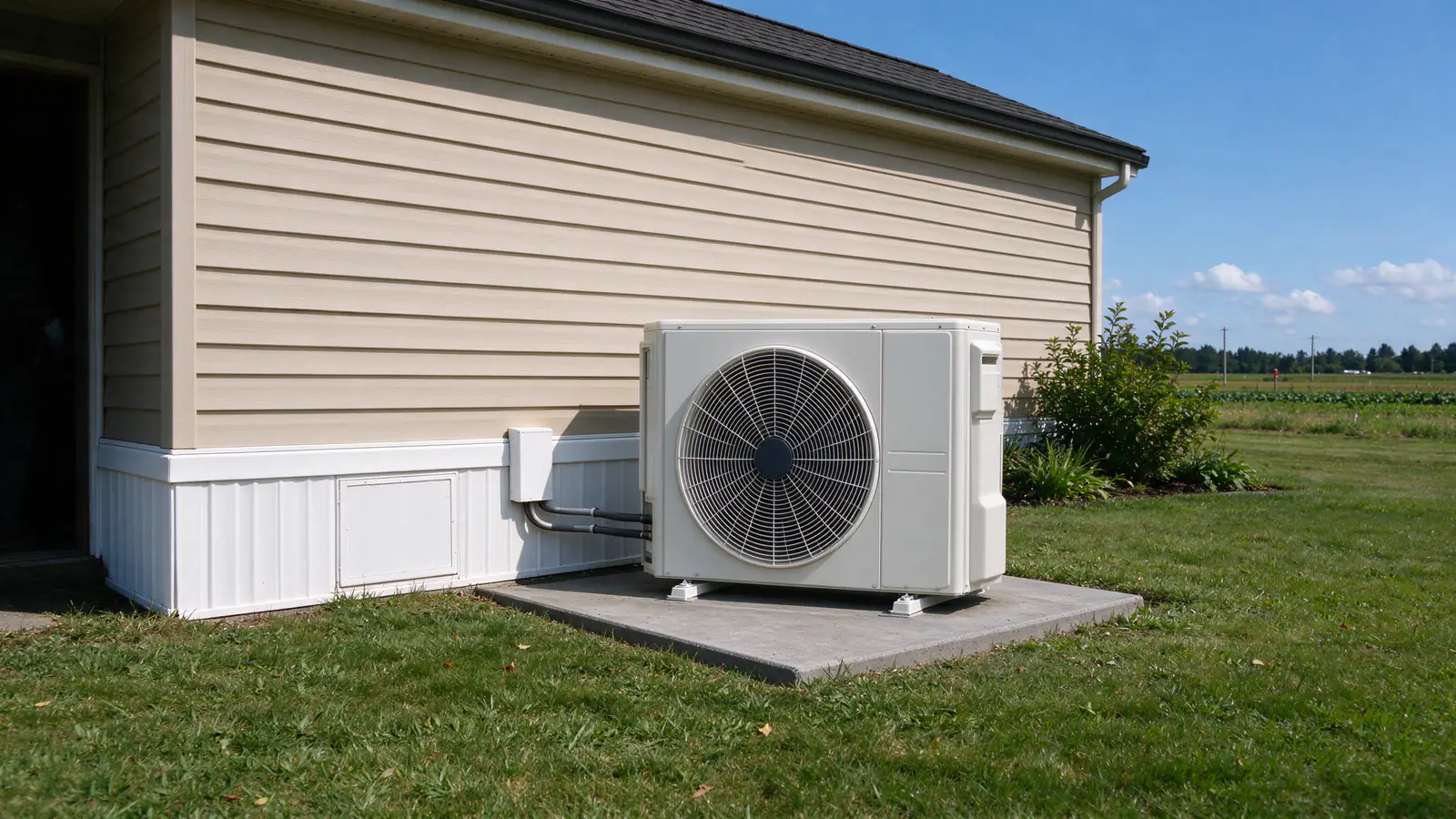
Start with the electric bill
Look at the name at the top of your electric bill first. Around Cornelius, it decides which incentives you can get before we talk about equipment.
Inside Cornelius city limits, the state’s utility map shows PGE. Forest Grove Light & Power, the City of Forest Grove’s own utility, starts at the line with Forest Grove and also serves rural areas around it. Firlands Portland Mini Splits installs mini splits on both, but the incentives differ, so it’s the first thing we ask.
Why the utility matters
Energy Trust of Oregon’s incentives come from PGE and Pacific Power customers’ bills, and they go back to those customers. Forest Grove Light & Power customers are outside Energy Trust, so its ductless incentive doesn’t apply there.
Project
Inside a Cornelius manufactured home conversion
The problem
The original electric furnace pushes heat through ducts in the belly of the home, and the bill doubles every winter. The ducts are tired, and the bedroom at the far end of the home never gets warm.
The house
The home sits on piers with vinyl skirting, so there is no crawlspace to work in. The walls are thin, the panel is in the hall, and the lot is flat with room beside the home for a pad.
What we decide, and why
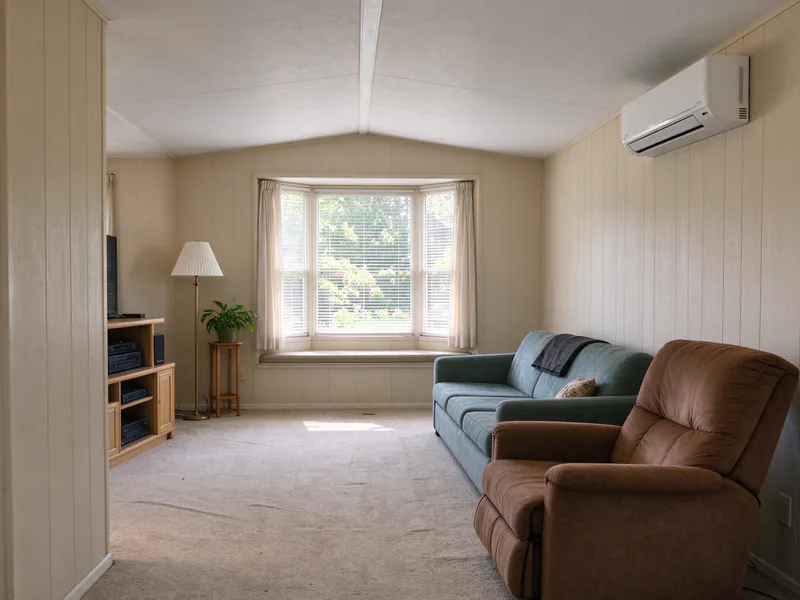
Two heads: 12,000 BTU in the living and kitchen area and 9,000 BTU in the primary bedroom. The furnace stays as backup. The outdoor unit sits on its own pad beside the home, not attached to it, so its vibration doesn't carry into the floor.
The work
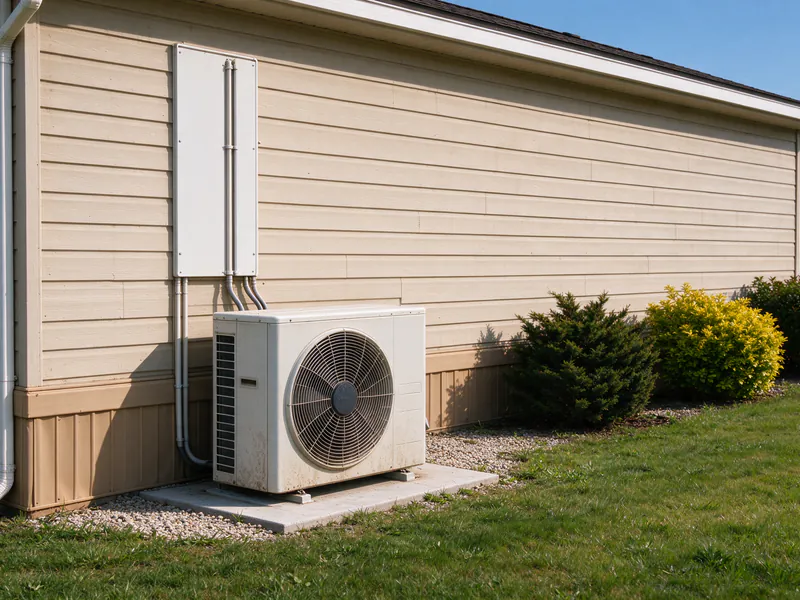
Each head mounts on blocking we add behind the wall panel, since manufactured home walls won't hold a head on the paneling alone. Line sets go straight out the walls and down covers to the pad, then along the skirting line. The circuit runs from the hall panel through the belly in conduit. Nitrogen test, vacuum below 500 microns, drains to daylight beside the skirting.
We seal the belly wrap where the circuit passes through, so the insulation under the floor stays dry and rodents stay out.
What it changes
The living area and primary bedroom come off the electric furnace, and the home qualifies for Energy Trust's ductless offer for manufactured homes.
- Location
- Cornelius, north of Baseline Street
- House
- 1994 double-wide manufactured home, about 1,500 square feet, electric furnace
- Equipment
- Two heads (12,000 and 9,000 BTU) on one 18,000 BTU cold-climate outdoor unit
- Price
- $9,800, permits included
- Time on site
- 2 days, then the final inspections
Manufactured homes: what’s different
About one Cornelius home in ten is manufactured, and a mini split on one needs a few details a site-built house doesn’t.
- Blocking behind each head. Manufactured home walls are thin, and the paneling won’t hold a head on its own. We add framing behind it.
- A pad set apart from the home. The outdoor unit sits on its own pad beside the home, not bolted to the wall, so vibration doesn’t travel into the floor.
- The belly stays sealed. Where the circuit runs under the floor, we reseal the belly wrap so the insulation stays dry and animals stay out.
- The furnace as backup. The original electric furnace stays wired, set below the heads, for the coldest nights.
- Skirting and access. Line sets come down the wall and run along the skirting line to the pad, out of the way of skirting panels you may need to remove.
Incentives for manufactured homes
On PGE, Energy Trust of Oregon pays $800 for a manufactured home when the ductless system replaces electric resistance heat in the main living space. Its manufactured home promotion pays more for qualifying equipment installed by a participating contractor. We check which applies to your home.
How many heads a manufactured home needs
Count the rooms you live in, not the square footage, and size each head from that room’s heat loss.
| Home | Usual layout | Why |
|---|---|---|
| Single-wide | One or two heads | A head at one end can’t push air past a long, narrow hall |
| Double-wide | Two heads, sometimes three | Living area and primary bedroom first, far bedrooms later |
| With an addition or porch room | A head of its own | The furnace ducts rarely reach it |
An older manufactured home can lose heat fast through thin walls and single-pane windows, so we size from what we measure, not a rule of thumb. How many mini splits do I need? explains the count.
Permits: Forest Grove and Washington County
Cornelius contracts its building services from the City of Forest Grove, so a mini split here takes a permit from Forest Grove and one from Washington County.
| Permit | Who issues and inspects it |
|---|---|
| Mechanical (heat pump, line set) | City of Forest Grove Building Division, for Cornelius |
| Electrical (new circuit, disconnect) | Washington County Building Services |
The City of Cornelius says so on its building page. We file both, schedule the inspections and close the job out with both finals. The fees are in your price. Mini split rebates in Oregon covers the incentive paperwork that goes alongside.
Frost on the outdoor unit
Out at the west end of the valley, clear winter nights leave frost on everything by morning, the outdoor unit included.
The nearest long-term weather station, at Hillsboro’s airport a few miles east, records freezing temperatures on more than 60 nights in an average year and dipped to 13°F in recent winters. Here is what we do about it in Cornelius:
| Condition | What we do |
|---|---|
| Frost most winter mornings | Choose a cold-climate model that keeps its output in the teens |
| Defrost cycles shedding water | Set the unit on a short stand over gravel, clear of paths |
| A manufactured home’s skirting | Keep the pad a foot or more from it, so ice and water stay off the skirting |
| Washington County’s 27°F design low | Size the heating to carry it, with the furnace as backup below that |
Do mini splits work in cold weather? explains how defrost works.
Electric-heat houses beyond manufactured homes
Nearly half of Cornelius homes heat with electricity, and in site-built houses that means baseboards, wall heaters or an electric furnace.
Baseboards and wall heaters
A baseboard to mini split conversion puts heads in the living room and primary bedroom, and leaves small rooms on their baseboards as backup.
Electric furnaces
Where the ducts are sound, a ducted heat pump can be the better swap; where they aren’t, ductless heads in the main rooms do better. Mini split electric bill shows the running-cost difference.
What it costs in Cornelius
Firlands’ typical range for one head is $4,000 to $8,500, and two heads on one outdoor unit run $6,500 to $12,000.
Three or four heads run $9,000 to $18,000 and up. A manufactured home’s blocking and belly work are on the estimate from the start, not added later. For rental homes, mini splits for rental property covers the higher incentive available for rentals on PGE. Mini split installation cost has the full breakdown.
Keeping it running
Outdoor units in farm country collect dust, pollen and leaves, so a yearly cleaning keeps the coil and the drains clear.
A maintenance visit typically runs $150 to $250 for one outdoor unit and one head, plus $40 to $120 for each additional head. It covers the filters, the coil, the drain and a check of the outdoor unit’s base pan, where debris and defrost water collect.
Around Cornelius
Cornelius runs along the Tualatin Valley Highway couplet, with neighborhoods north and south of it and farmland beyond.
- North and south of Baseline and Adair. Older site-built houses, some with baseboards or wall heaters.
- Manufactured homes. Wherever they sit in town, the blocking, pad and belly details above apply.
- Newer subdivisions on the edges. Houses from the 1990s on, where a single-zone head handles one hot room or a multi-zone system covers the upstairs.