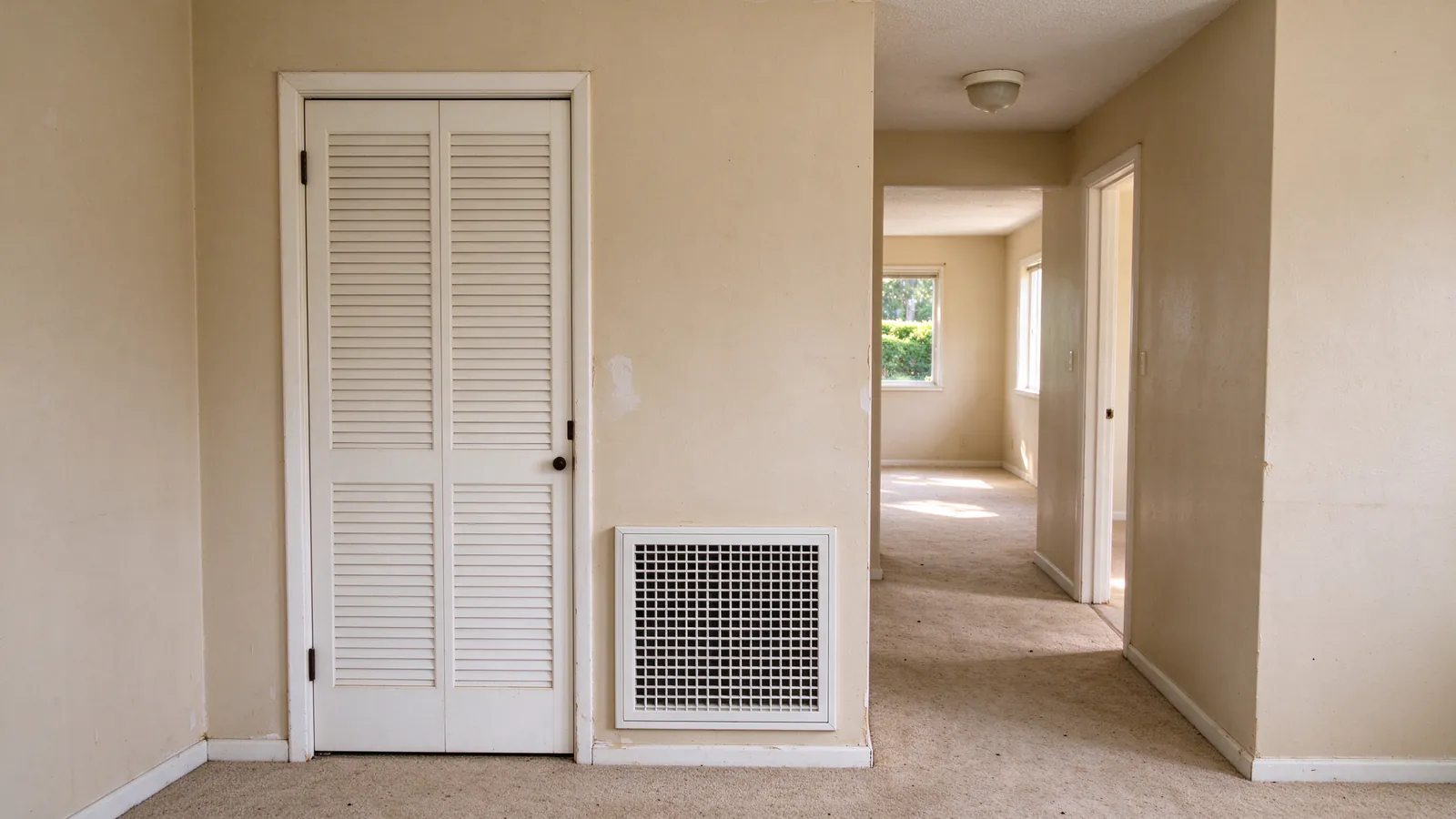
A ranch with an old furnace in the hall closet
Five Corners has more 1960s and 1970s houses than its neighbors, and many still heat with the electric furnace they were built with.
If yours is one of them, the furnace is near the end of its life and the bill reflects resistance heat. Firlands Portland Mini Splits replaces it with a heat pump, and the first decision is whether to keep using the ducts in the crawlspace or put heads on the walls.
Project
Inside a Five Corners ranch with a hall-closet furnace
The problem
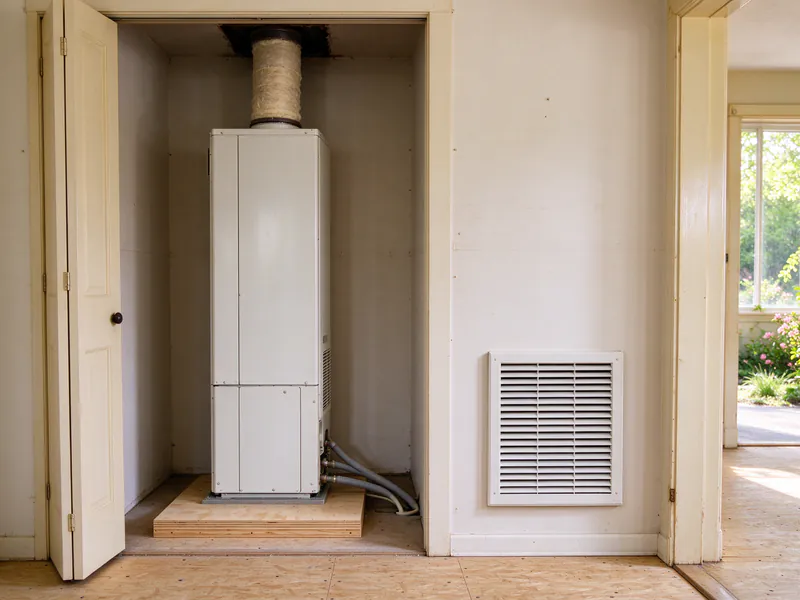
The 1970s electric furnace in the hall closet is near the end of its life, and the owner wants heat-pump heating and cooling without heads on the walls of every room.
The house
The ducts run through a 30-inch crawlspace to floor registers in every room and are in fair shape, but the joints were never sealed. The hall closet is 30 inches deep, enough for a slim ducted air handler.
What we decide, and why
A concealed ducted mini split air handler in the closet, feeding the existing ducts, instead of three or four wall heads. We seal the duct joints first, because a heat pump delivers cooler supply air than a resistance furnace and leaks show up as cold rooms. The choice affects the rebate: Clark Public Utilities' $900 offer is for ductless systems, so we check the utility's current rules for a ducted unit before you commit.
The work
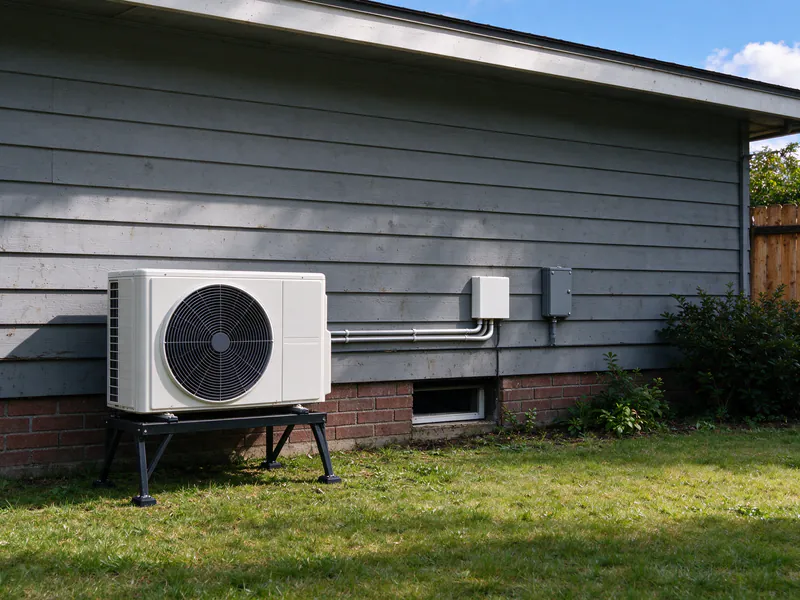
The old furnace comes out; the air handler goes in on a new platform with a filter grille and a new return. Ducts get mastic at every joint in the crawlspace. The line set runs under the floor to the outdoor unit on a stand at the back of the house. A 25-amp, 240-volt circuit replaces the furnace's 60-amp circuit, freeing panel space. Pressure test, vacuum below 500 microns, airflow check.
We measure static pressure on the old ducts before we pick the air handler; a slim unit has less push than a furnace blower, and the registers have to stay within what it can drive.
What it changes
One thermostat, no heads on the walls, heat-pump efficiency in place of a resistance furnace, and the closet holds equipment sized for the house.
- Location
- Five Corners, unincorporated Clark County
- House
- 1972 single-level ranch, about 1,400 square feet, electric furnace with crawlspace ducts
- Equipment
- One 24,000 BTU concealed ducted air handler and its cold-climate outdoor unit
- Price
- $12,800, permit fees included
- Time on site
- 2 days, then the final inspections
Ducted or ductless: the Five Corners decision
Both are mini split heat pumps. The difference is whether the heat arrives through your existing floor registers or from heads on the walls.
| Concealed ducted air handler | Wall heads (ductless) | |
|---|---|---|
| What you see | The old floor registers and one return grille | A head in each main room |
| Uses the old ducts | Yes, after sealing and checks | No |
| Room-by-room control | One zone, one thermostat | Each head has its own |
| Typical range | $8,500 to $16,000 and up | $6,500 to $12,000 for two heads |
| Clark Public Utilities $900 | Check current rules first | Applies when replacing electric heat |
The ducted mini split page covers air handlers, and cassette vs wall mount the different indoor units.
When the old ducts are good enough
Ducts from the 1970s can carry a heat pump, but only after we check three things.
Sealing
Old duct joints in a crawlspace usually weren’t sealed. A heat pump’s supply air is cooler than a resistance furnace’s, so leaks show up as cold rooms. We seal the joints with mastic first.
Static pressure
A slim mini split air handler has less push than a furnace blower. We measure the ducts’ resistance before choosing it; if the registers and returns are too small, ductless wins.
Closet space
The hall closet has to hold the air handler, its filter and a service clearance. Most 1970s furnace closets are deep enough.
When heads on the walls make more sense
If the ducts are crushed, wet or undersized, or you want each room on its own setting, heads skip the duct question entirely.
A three-bedroom ranch of about 1,300 square feet usually needs two or three heads: the living room, a hall head for the bedrooms, and sometimes the primary bedroom on its own. The old furnace comes out, and a baseboard or two stays for backup. Whole-house mini split and how many mini splits do I need? help you count.
Permits in unincorporated Clark County
Five Corners isn’t part of the City of Vancouver, so Clark County issues the mechanical permit and Washington L&I the electrical permit.
| Permit | Covers | Issued by |
|---|---|---|
| Mechanical | Air handler or heads, line sets, drains | Clark County Community Development |
| Electrical | New circuit, disconnect, removing the furnace circuit | Washington L&I |
Permit fees are in our price. A furnace’s large circuit usually comes out when the air handler or heads go in, which frees panel space. Under Washington rules, the new circuit from the panel is electrical-contractor work; mini split electrical requirements explains the sizes.
The rebate depends on what you install
Clark Public Utilities pays $900 toward a ductless heat pump that replaces permanently installed electric heat, and it lists electric furnaces among the qualifying heat.
What that means here
- wall heads replacing an electric furnace in a home you own and live in can qualify
- a ducted air handler sits outside a ductless program’s description, so we check the utility’s current rules for it
- either way, the installer must be in the utility’s contractor network, which is how we schedule Clark County jobs
Winter sizing for the east side
We size both options to Clark County’s 28°F design low and pick outdoor units by their published output colder than that.
Pearson Field, the county’s design station, averages about 45 nights a year at or below freezing and two or three at 20°F or less.
Backup on the coldest nights
With a ducted system, the air handler can include a small electric heat strip for the coldest hours; with heads, a baseboard or two does that job. Mini split vs central heat pump compares the trade-offs.
One zone or several: living with each
The choice also changes how the house feels day to day, not just what’s on the walls.
With a ducted air handler
One thermostat runs the whole house, the way the furnace did. Rooms at the far end of a long duct run can still lag a degree or two, and a closed bedroom door cuts its airflow. A filter at the return grille gets changed every few months.
With heads
Each head has its own remote, so a bedroom can sleep cooler than the living room. Rooms without a head rely on open doors or a baseboard. Head filters get a rinse every month or two in the heating season, and a yearly maintenance visit covers the coils and drains.
Removing the old furnace
Whichever way you go, the old furnace comes out, and that frees space in the closet and in the panel.
- the furnace and its large dedicated circuit are disconnected and removed
- the closet is cleaned out, and either the air handler goes in or the ducts get capped at the closet and at each register
- the panel space the furnace used covers the new heat pump circuit, so a 200-amp panel often needs no upgrade
Removing the furnace and capping what’s left is a line on the written estimate, with nothing left to guess about.
Five Corners prices
Firlands’ typical range for a concealed ducted system is $8,500 to $16,000 and up; for two ductless heads it’s $6,500 to $12,000, and three or four $9,000 to $18,000 and up.
The written estimate for either one lists the equipment and capacities, the duct sealing or head locations, line-set routes, drains, circuit, permits and exclusions, so you can compare them side by side. The cost estimator gives a first range.