Cooling a house that was built without it
Most Cedar Mill houses heat with gas and do it well. The trouble is July, when the house has no cooling and the window unit comes out of the garage again.
Firlands Portland Mini Splits adds cooling to those houses without touching a furnace that still works. Cedar Mill has the highest share of gas heat among the west-side communities we serve: about seven in ten homes. That makes the job here mostly about cooling.
Why not just add central air?
Central air needs ducts sized for cooling. In an older house the ducts were sized for heat, the upstairs runs are long, and adding an air conditioner to them leaves the hottest rooms behind. A head goes straight to the room that needs it.
Project
A typical Cedar Mill daylight-basement cooling job
The problem
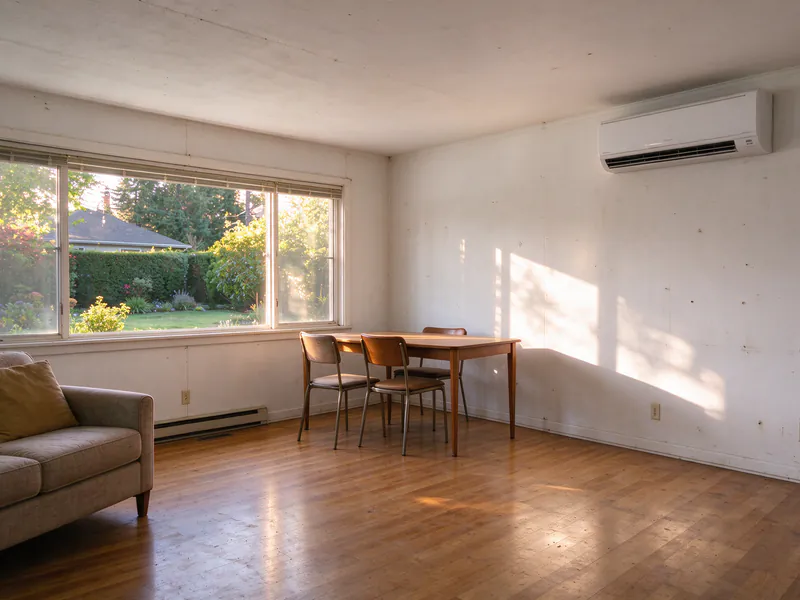
The main-floor living and dining room faces west through a wall of windows and hits 85°F by evening in July. The gas furnace heats the house well, and there's no central air, just a window unit hauled out every summer.
The house
The main floor sits a full story above the back yard, and the lot is shaded by tall Douglas firs. The furnace and panel are in the daylight basement, which opens to the yard through a sliding door.
What we decide, and why
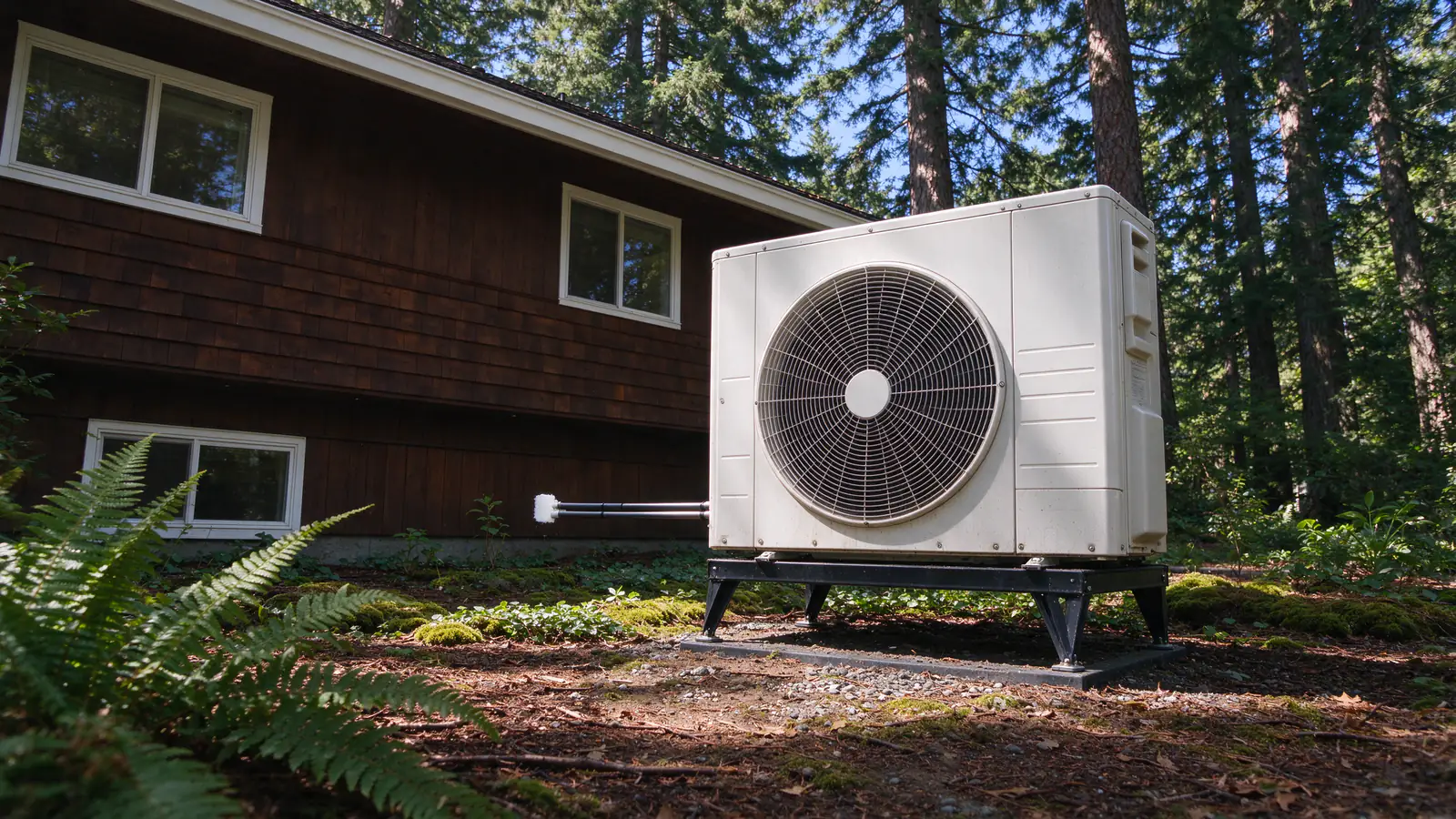
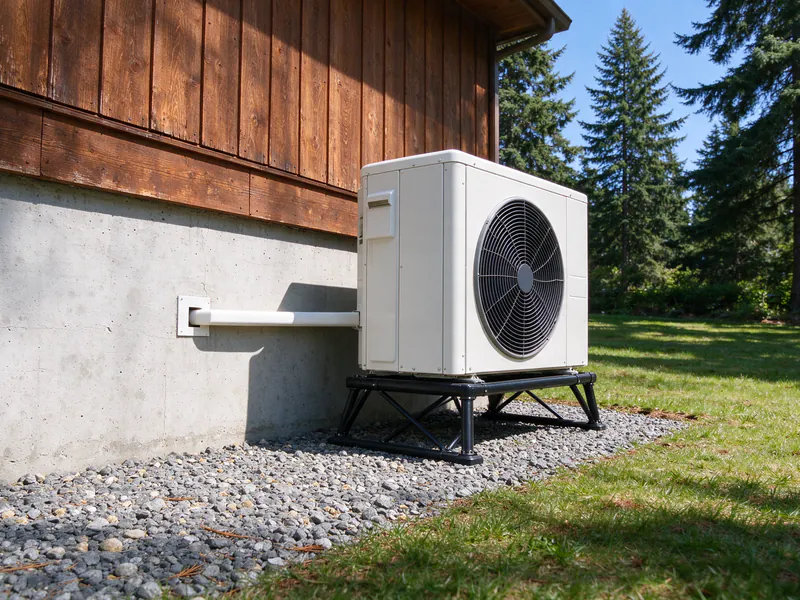
One 15,000 BTU head on the interior end wall of the open living and dining room cools the whole space; the furnace stays as the heat. We place the outdoor unit on a stand at the side of the house, ten feet from the nearest fir, where needles and cones don't drop straight onto the top of the unit.
The work
The head's line set runs through the floor framing into the basement ceiling, along a joist bay and out the basement wall to the stand, about 30 feet in all, so nothing runs up the outside of the house. The 20-amp circuit comes from the panel a few feet away. Nitrogen test, vacuum below 500 microns, and the drain falls through the same route to daylight at the basement wall.
Running the lines through the basement ceiling hides them completely; a two-story outside cover on the back wall stays in plain view.
What it changes
The living and dining room cools on summer evenings without a window unit, and the gas furnace keeps doing the heating.
- Location
- Cedar Mill, near Cornell Road
- House
- 1968 daylight-basement house, about 2,100 square feet, gas furnace
- Equipment
- One 15,000 BTU cold-climate wall head, ground stand
- Price
- $6,950, permits included
- Time on site
- 1 day, then the final inspections
Under the firs: where the outdoor unit goes
On a wooded lot, the outdoor unit needs to sit out from under the canopy, with room to clean around it.
Where a lot has tall Douglas firs or big-leaf maples, they shade the house, which helps in summer. They also drop needles, cones and leaves all year.
- Out from under the canopy. We look for a spot where nothing drops straight onto the top of the unit, even if it adds a few feet of line set.
- Up on a stand. It keeps needles and leaves from piling against the coil.
- Room to reach it. At least a couple of feet on the service side for cleaning and repairs.
- Away from the gutter line. Overflowing gutters full of needles pour onto whatever sits below them.
Units under trees need a yearly cleaning more than most. Mini split cleaning and maintenance covers what that involves, and mini split placement covers clearances.
Daylight basements and hidden line sets
Where a Cedar Mill house sits on a slope with a daylight basement, the basement ceiling is often the best route for a line set.
Through the basement ceiling
A head on the main floor can run its line set down through the floor framing and along the basement ceiling to an outside wall at yard level. Nothing climbs the outside of the house, and the outdoor unit sits on level ground by the basement door.
Heating the basement itself
A daylight basement used as a family room or office is often the coldest room in the house. A basement mini split heats and cools it on its own, and drains to daylight through the same wall.
Permits: the county, not a city
Cedar Mill is unincorporated Washington County, so the county issues and inspects mini split permits here.
A Cedar Mill home may have a Portland mailing address, but that doesn’t make it a City of Portland permit.
The Multnomah County edge
The census area also reaches east into Multnomah County, where Cedar Mill Creek begins, and there the permit office is different. We check the jurisdiction for your address on the first call, apply for both permits, book the inspections, and close the job out with the final. Mini split permits explains the inspections.
Spring and fall without the furnace
A head that cools in July also heats, and in a gas-heated house that’s useful in the shoulder seasons.
On a 45°F October morning, firing the furnace to warm the whole house for the one room you’re sitting in wastes gas. A head warms that room alone, efficiently, and the furnace waits for real winter. We pick cold-climate models even for cooling-first jobs, so the head can carry its room well into winter if you want it to.
Cooling more than one room
When the bedrooms upstairs and the main-floor living space all run hot, a multi-zone system covers them from one outdoor unit.
- Two heads. The living room and the primary bedroom, where most of the day and night are spent.
- Three or four heads. Every bedroom plus the living space, on one outdoor unit sized for all of them. Multi-zone mini split installation covers the details.
- Sized together. We size the outdoor unit to what the rooms need at the same moment, not the sum of every head running flat out.
What a Cedar Mill install costs
Firlands’ typical range for one head is $4,000 to $8,500, and two heads on one outdoor unit run $6,500 to $12,000.
Three or four heads run $9,000 to $18,000 and up, for a house where several rooms need cooling. Washington County permit fees are in the price. Mini split installation cost shows what moves a job within the range.
The incentive question
Cedar Mill is PGE territory, but Energy Trust of Oregon’s ductless incentive only applies when the new system replaces electric resistance heat in the main living space. In a gas-heated house adding cooling, it doesn’t. A house with baseboards in the living room can qualify for $800.
Window unit, central air or a head?
For one or two rooms, a head beats a window unit on noise and comfort; for the whole house, it depends on the ducts.
| Option | Best for | The catch |
|---|---|---|
| Window unit | One room, lowest up-front cost | Noisy, blocks a window, cooling only |
| Mini split head | One to four rooms, heat and cool | Higher up-front cost |
| Central air on the furnace | A house with ducts sized for cooling | Upstairs rooms often lag |
Mini split vs window AC and mini split vs central heat pump go further. Closed windows also help on smoky days; do mini splits filter wildfire smoke? explains what a head’s filter can and can’t do.
Along Cornell Road and beyond
Cedar Mill’s housing runs from the 1950s and 1960s through the 2000s, and the age of the house shapes the job.
- Around Cornell and Saltzman. Older houses, some on wooded lots or with daylight basements: cooling added to gas heat.
- Toward Barnes Road and Leahy Road. Where a street climbs the hill, the outdoor unit spot takes planning.
- The newer subdivisions. Houses with central air, where a single-zone head handles one hot room.