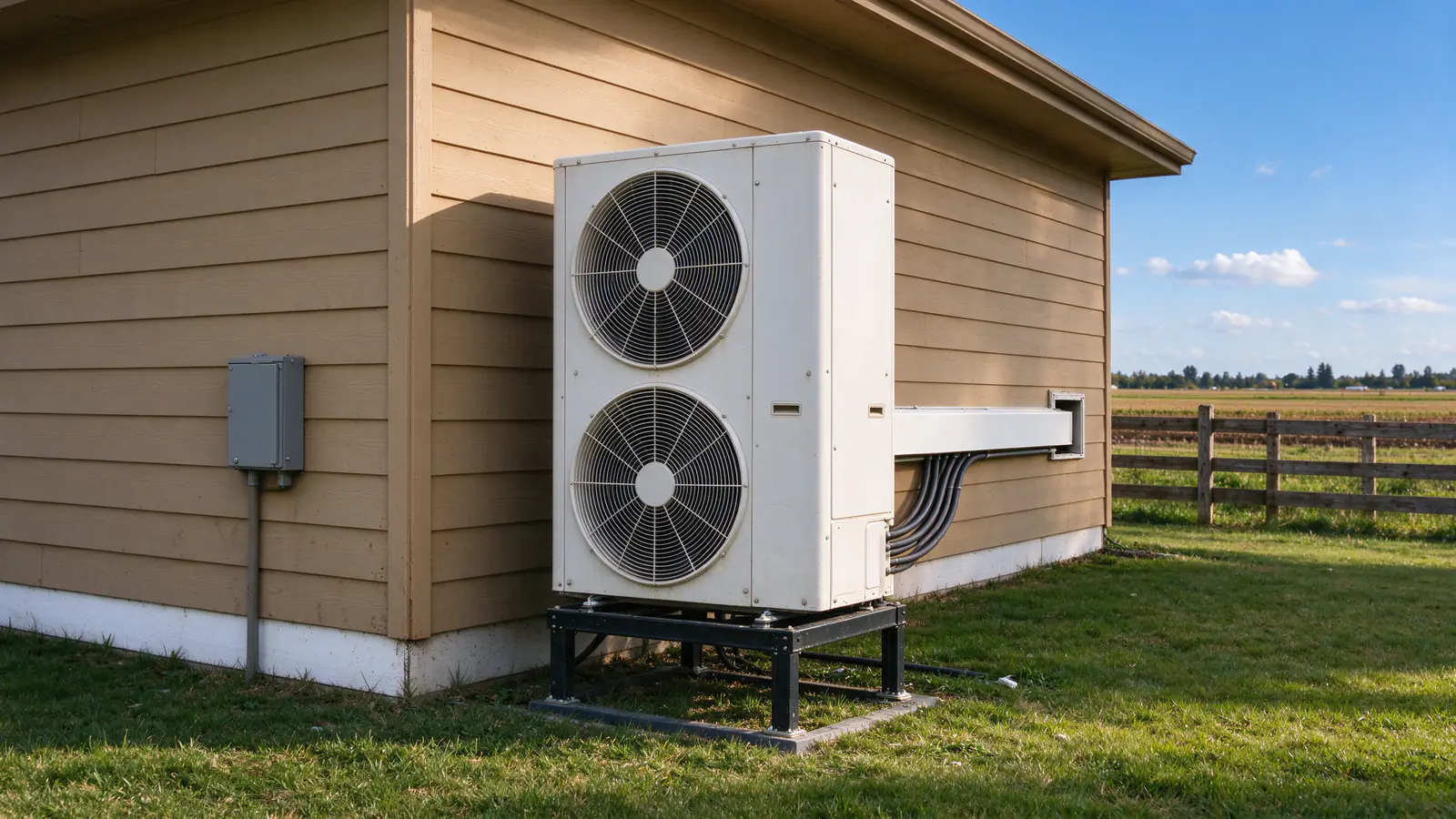
Electric heat, and a utility that isn’t PGE
In Canby, the first thing we check is who sends your electric bill. It’s usually Canby Utility, not PGE, and six in ten homes here heat with electricity, so the answer decides which rebate you get.
Most of that heat is wall heaters and baseboards, in ranches and newer two-story houses alike. Firlands Portland Mini Splits plans the heads room by room either way, and sorts out the rebate before you sign.
What a Canby house usually has
- a heater on its own circuit in every room
- a crawlspace and an open attic, so line sets route easily
- a panel in the garage full of 240-volt heating circuits
Project
A typical Canby ranch, every wall heater replaced
The problem
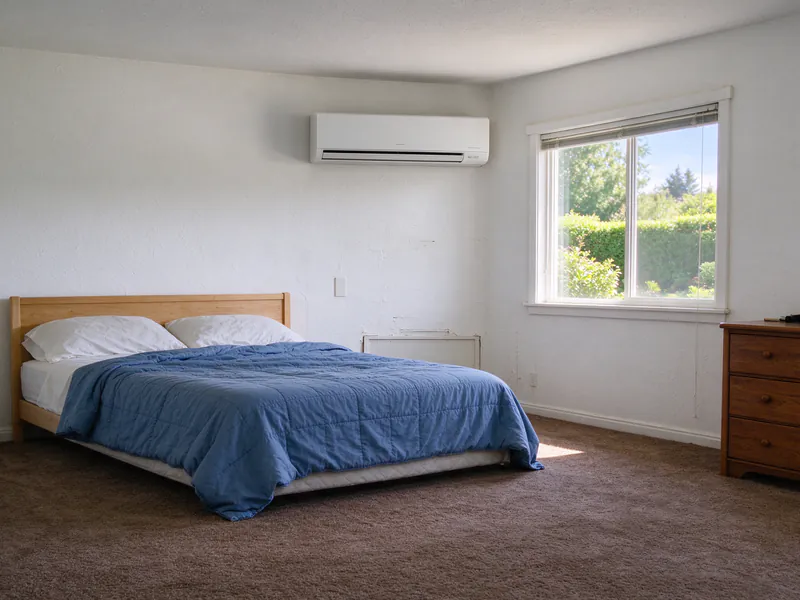
Seven wall heaters, two of them dead, a panel full of heating circuits, and no cooling. The owners want one system for the whole house rather than replacing heaters one at a time, and the house is on Canby Utility, not PGE.
The house
Living room and dining area across the front, family room off the kitchen, four bedrooms along a back hall, a crawlspace under everything and an open attic above. The panel is in the attached garage. Canby is one of the cities where Clackamas County issues every building permit.
What we decide, and why
Five heads cover every room people live in: 15,000 BTU in the living and dining space, 9,000 in the family room and the primary bedroom, and 7,000 in each of the two smaller bedrooms. The fourth bedroom, used as an office, shares with the hall through its open door, and the bathrooms keep small heaters. One 42,000 BTU outdoor unit carries all five heads at the 24°F design low, sized from the rooms' combined load rather than the heads' nameplate total.
The work
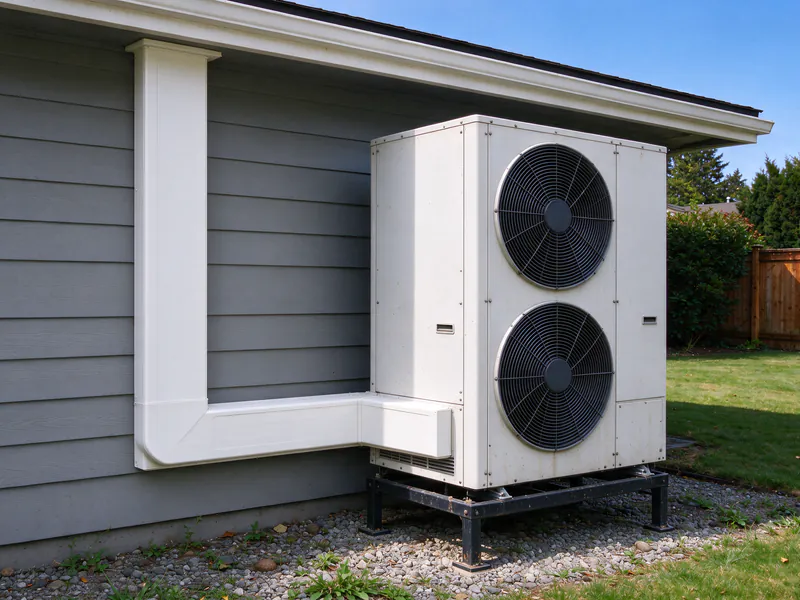
Five three-inch holes, all on outside walls. The line sets run through the attic to the back corner and drop down one wall in a single wide cover to a stand. A 40-amp, 240-volt circuit runs from the garage panel to a disconnect beside the unit. The heater circuits in the five rooms come off, which frees enough breaker space that the panel doesn't need an upgrade. Each line set is pressure-tested with nitrogen on its own and the system is evacuated below 500 microns. All five heads drain outside by gravity.
Because the house is on Canby Utility, Energy Trust's ductless incentive doesn't apply. We point the owners to Canby Utility's own residential ductless heat pump rebate and give them the equipment details it asks for.
What it changes
One system that heats and cools every main room, seven wall heaters down to two small bathroom heaters, and a panel with room to spare.
- Location
- North Canby
- House
- 1975 single-level ranch, about 1,800 square feet, recessed electric wall heaters in every room
- Equipment
- Five heads (15,000, 9,000, 9,000, 7,000 and 7,000 BTU) on one 42,000 BTU cold-climate outdoor unit
- Price
- $19,800, permits included
- Time on site
- 3 days, then the county's final inspections
The rebate is Canby Utility’s, not Energy Trust’s
Energy Trust of Oregon’s ductless incentive is paid to PGE and Pacific Power customers. Canby Utility customers aren’t eligible for it, because Canby Utility is a separate public utility.
What applies instead
Canby Utility lists its own residential ductless heat pump rebate, along with rebates for air-source heat pumps. The utility sets the amount, the equipment requirements and how to apply, and they can change, so we check them for your address before the estimate and give you the model numbers and ratings the application asks for.
Outside the city
Rural addresses outside Canby Utility’s service area may be on PGE, where Energy Trust’s offer applies instead: $800 for a single-family home when a ductless system replaces electric resistance heat in the main living space. Your bill tells you which. Mini split rebates in Oregon covers both.
Clackamas County issues every permit
Canby doesn’t run its own building permits. Clackamas County reviews and inspects the structural, mechanical, plumbing and electrical work here.
| Permit | Covers | Issued by |
|---|---|---|
| Mechanical | Heat pump, heads and line sets | Clackamas County |
| Electrical | New 240-volt circuit and disconnect | Clackamas County |
We file both, include the fees in the price, and close the job with the county’s final inspections.
All at once, or a room at a time?
With electric heat in every room, the first decision is whether to replace it all in one job or start with the rooms that cost the most.
| Approach | When it fits |
|---|---|
| Whole house, one outdoor unit | Heaters failing in several rooms, and you want cooling everywhere |
| Living space and primary bedroom first | A tighter budget; the outdoor unit is sized to add heads later |
| One room | A single room with a dead heater or no cooling |
A whole-house mini split needs every head sized to its room and an outdoor unit sized to the rooms’ combined load, which is less than the heads’ nameplates added up. How many mini splits do I need? covers the count.
Sizing for a valley winter
Clackamas County’s heating design temperature is 24°F. When heads replace every heater in the house, they have to carry it on that night.
We size each head to its room’s load at the design low and check the outdoor unit’s published output below it. In a whole-house job we pick a cold-climate unit and leave small heaters in the bathrooms as backup. Mini split sizing explains why a room’s windows and insulation matter more than its square footage.
Freeing up the panel
Removing heater circuits gives back breaker space, and that usually makes room for the mini split’s own circuit.
A whole-house outdoor unit typically needs one 240-volt circuit of 30 to 40 amps. In a house with seven heaters on 20-amp double-pole breakers, taking five off frees ten spaces and a lot of load. Where the panel is still too small, Firlands’ typical range for a service upgrade is $2,500 to $6,000. Baseboard to mini split covers the conversion.
Three days for a whole house
A five-head job in a single-level Canby ranch usually takes three days on site, once the county has issued the permits.
- Day one. We protect the floors, core the holes on outside walls, hang the heads and start the line sets through the attic.
- Day two. The outdoor unit goes on its stand, the circuit and disconnect go in, and the heater circuits in the converted rooms come off at the panel.
- Day three. Each line set is pressure-tested with nitrogen, the system is evacuated below 500 microns and held, every drain is tested with water, and we start it up and set the controls with you.
You keep the test readings on paper, and the county’s final inspections close the permits. The installation process explains each test.
Summer in the valley
Canby sits out in the Willamette Valley, and its summers are hot and dry. Clackamas County’s cooling design temperature is 88°F, and the 2021 heat dome took the metro well past 110°F.
A house on wall heaters has never had cooling, so every head added is also the first air conditioning in that room. We size for the design day, not the record, so the heads don’t short-cycle the rest of the year.
Manufactured homes and shops
About 5% of Canby’s homes are manufactured, and many properties near town have a detached shop.
A manufactured home usually takes one or two heads on long outside walls, with the outdoor unit on its own pad or stand rather than on the home. A shop gets its own outdoor unit and circuit, usually from a subpanel in the building; see garage mini split installation.
What Canby jobs cost
Firlands’ typical range runs from $4,000 to $8,500 for one head to $15,000 to $30,000 and up for a whole-house system with five or more.
Two heads on one outdoor unit typically cost $6,500 to $12,000, and three or four $9,000 to $18,000 and up.
What moves it
Where heater circuits come off and free the panel, a whole-house job avoids the cost of a service upgrade. A long line run across a big single-story house, or a condensate pump for an interior head, moves the price up. Mini split installation cost in Portland lists the price drivers.