The week the house gets hot is the hardest week to start planning cooling: you’re deciding in a hurry, in a hot house. At Firlands Portland Mini Splits we suggest calling in spring. Here’s what to settle now so the heads are running before July.
Why plan in spring?
Because the install is quick but the steps before it aren’t. A visit, a written estimate, your decision, the permit and a slot on the calendar all come before anyone drills a hole.
Portland’s summers are short but sharp. The airport averages about two weeks a year at 90°F or above, and the June 2021 heat dome reached 116°F there (NOAA). Upstairs bedrooms in older houses run hotter than the outdoor reading, which is why those rooms come first on most lists.
What can you do before the visit?
Three things, and each one makes the visit shorter and the estimate sharper. None of them needs a tool.
- Pick the rooms. List the rooms that are uncomfortable and when. If it’s only the bedrooms on hot nights, that’s a different system from a whole floor all day. How many mini splits do I need? walks through counting heads.
- Take photos. Each room from the doorway, the electrical panel with its door open, and the side or back yard where an outdoor unit could sit. Send them through the contact page and we can give you a rough range on the phone.
- Find out what heats the house. Baseboards, a gas furnace, an oil furnace or a boiler each change the plan, and the incentive you can apply for.
What happens at the visit?
We measure each room, look at the walls for line routes, check the panel and find a spot for the outdoor unit. Nothing is sized from the square footage of the house.
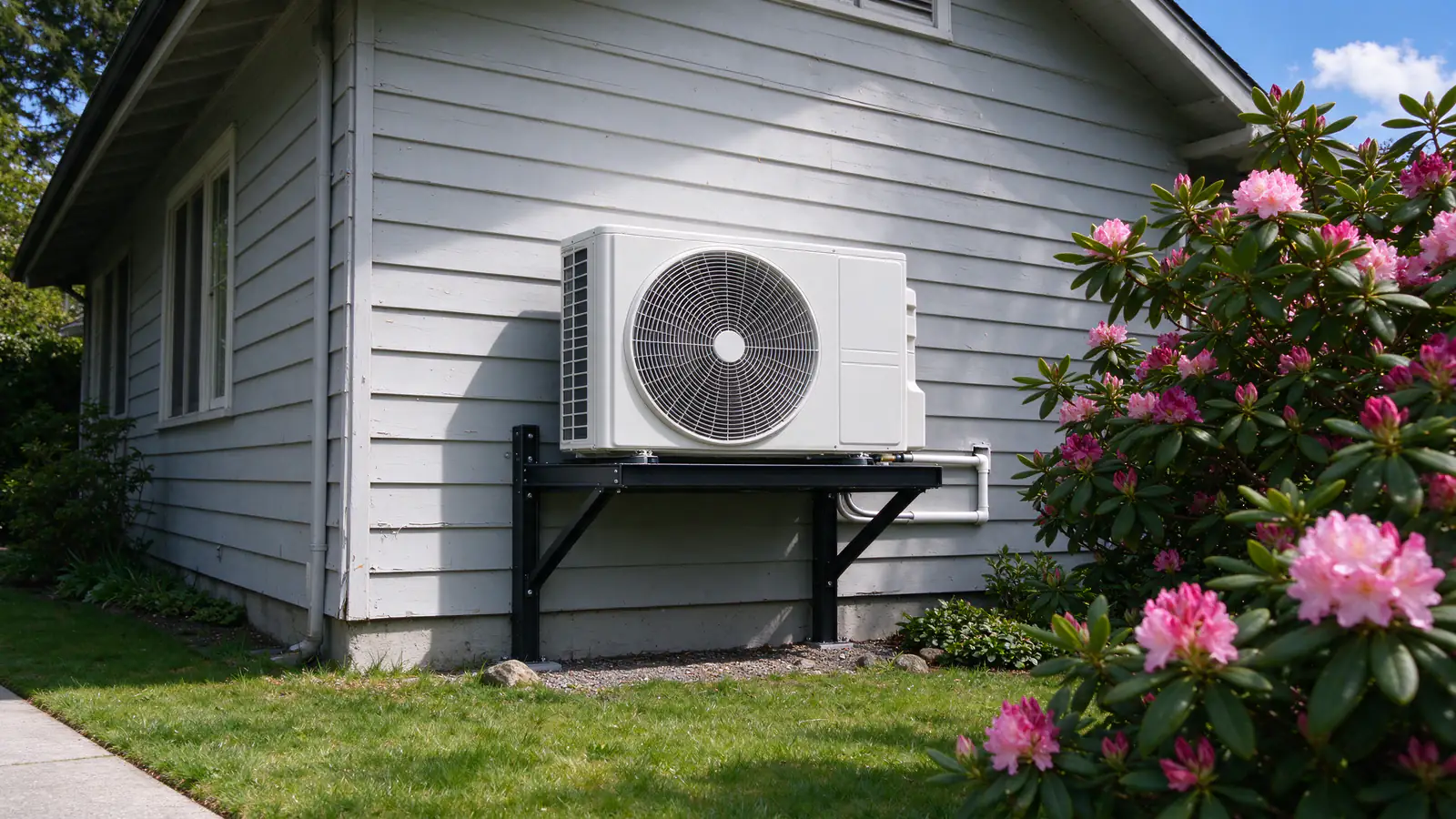
In Portland the outdoor unit can’t sit in the required front setback, and in side or rear setbacks it stays five feet tall or less (City of Portland). On a narrow lot that usually means a wall bracket in the side yard. The placement guide covers the choices.
The panel is the thing to check early
Most installs need one new 240-volt circuit. If the panel has no room, that’s separate electrical work before the install, and it’s the step most likely to stretch the schedule. The electrical requirements guide explains what we look for.
How long does the install take?
A single room is often one day on site. Three or four heads on one outdoor unit is usually two or three days, depending on how the line sets get upstairs.
| Job | Time on site | What decides it |
|---|---|---|
| One head, outside wall | Often one day | Line-set length, bracket or pad |
| Two heads | One to two days | Whether both rooms are on the same floor |
| Three or four heads | Two to three days | Chases between floors, pumps, line-hide |
| Whole house | Several days | Number of outdoor units, circuits |
Before startup, every line set holds a nitrogen pressure test and a vacuum held below 500 microns, and every drain is tested with water. You get the readings on paper. What a Portland multi-zone install looks like shows the whole sequence.
What about the permit?
Every install in Portland takes a mechanical permit for the heat pump and an electrical permit for the circuit. We include the city fees in the price and close the permit with the final inspection.
Other cities around Portland and the City of Vancouver run their own permits. Mini split permits in Portland covers who needs what, and the service areas page lists the permit office for each town.
Does the timing change the incentive?
Only the deadline. If the heads replace electric baseboards or wall heaters in an Oregon house on PGE or Pacific Power, Energy Trust’s ductless incentive applies, and the application is due within 60 days of the install.
A typical owner-occupied single-family house currently gets $800; rentals, attached homes and income-qualified households get more. Gas-heated houses don’t qualify for the ductless offer. Mini split rebates in Oregon has the details, and in Clark County it’s Clark Public Utilities’ rebate instead.
What if summer arrives first?
Then cool one room well and plan the rest. A window or portable unit in the main bedroom gets you through a heat wave while the visit and estimate happen.
Keep the plan going
The window AC comparison explains why a head is the better long-term answer: it cools quietly, it heats in winter, and nothing goes in or out of the window each year. When you’re ready, single-zone installation covers one room and multi-zone installation covers several. Our typical ranges are in the Portland cost guide.