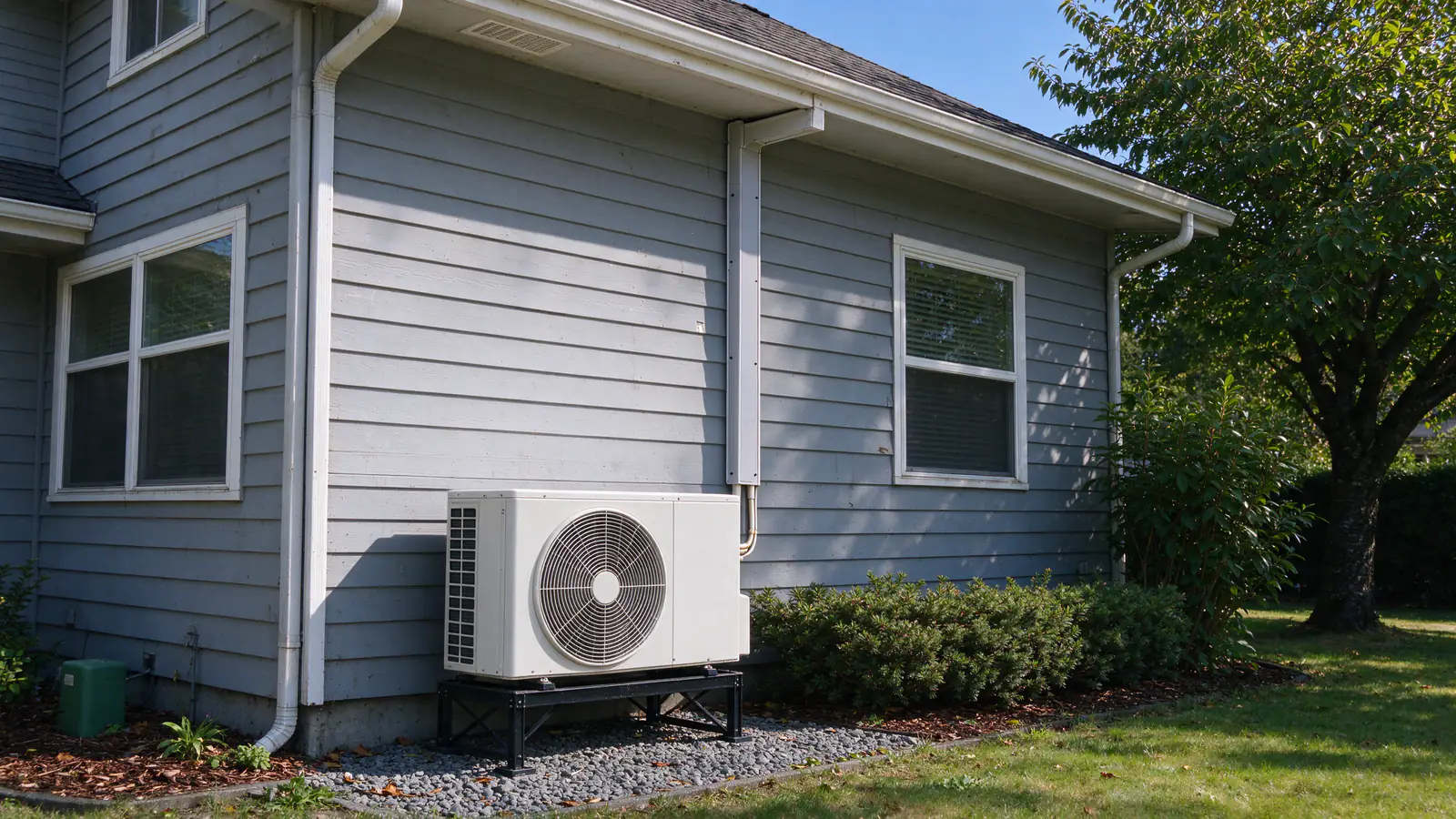
When the electric furnace is the problem
An electric furnace or baseboards is the costliest way to heat a Tualatin house, and a heat pump is where the savings are. The real question is whether it goes on the ducts or in the rooms.
Nearly half of Tualatin’s homes heat with electricity. Firlands Portland Mini Splits installs ductless and concealed ducted mini splits across the city, and in an electric-furnace house we start by looking hard at the ducts. They decide which kind of heat pump makes sense.
Why an electric furnace costs so much
An electric furnace is a big set of resistance coils with a fan. It turns each kilowatt-hour into one kilowatt-hour of heat. A heat pump moves heat in from outdoors and, on a typical Tualatin winter day, delivers several times as much heat for the same electricity. Mini split electric bill shows the arithmetic.
Project
A typical Tualatin electric-furnace house, three heads
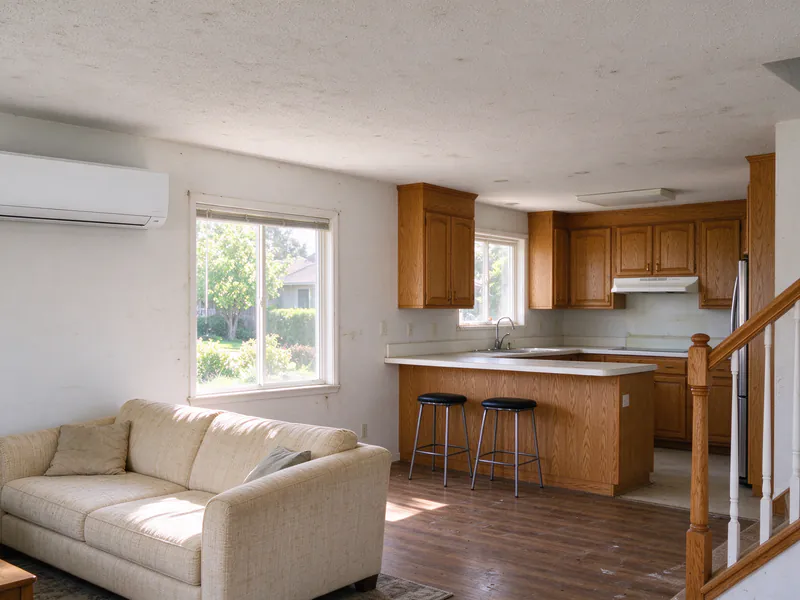
The problem
The electric furnace heats the house through ducts, and the winter bills run well over what neighbors with gas pay. Summer means two window units upstairs.
The house
The ducts run through the crawlspace and a single upstairs chase, and the upstairs returns are small. The panel in the garage has the room for one new 240-volt circuit once we account for the furnace.
What we decide, and why
We compare two paths: a ducted heat pump on the existing ducts, or ductless heads in the rooms that are used most. The upstairs ducts are undersized for cooling, so we choose three heads: the open living and kitchen space, the primary bedroom and the upstairs office. The furnace stays wired as backup for the coldest nights and the rooms without heads.
The work
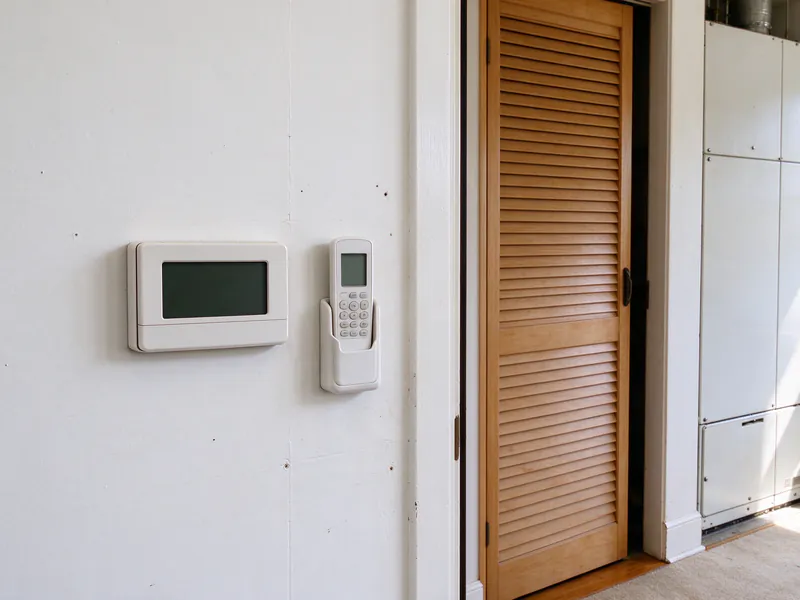
Two upstairs line sets run through the attic and down a cover on the side wall; the living room head goes straight out the wall behind it. The outdoor unit sits on a stand at the side of the house with a 30-amp circuit from the garage panel. Nitrogen test, vacuum below 500 microns, three drains tested with water. The furnace thermostat is set below the heads so it only runs when they can't keep up.
Setting the furnace to back up rather than compete is the step that makes the bill drop; left at the same setpoint, the furnace runs alongside the heads all winter.
What it changes
The heads carry most of the heating and all of the cooling, the window units go, and the furnace becomes the backup it should be.
- Location
- Tualatin, west of Boones Ferry Road
- House
- 1986 two-story, about 1,900 square feet, electric forced-air furnace
- Equipment
- Three heads (15,000, 9,000 and 9,000 BTU) on one 24,000 BTU cold-climate outdoor unit
- Price
- $13,250, permits included
- Time on site
- 3 days, then the final inspections
Ducted or ductless in an electric-furnace house
Good ducts favor a ducted heat pump; weak or undersized ducts favor ductless heads in the rooms you use.
| What we find | What usually fits |
|---|---|
| Ducts sealed, sized well, reaching every room | A central or concealed ducted heat pump on the existing ducts |
| Undersized upstairs runs, small returns | Ductless heads in the main rooms, furnace kept as backup |
| Ducts in a damp crawlspace, leaking | Ductless, rather than paying to heat the crawlspace |
| Only a few rooms in daily use | Two or three heads, the rest left on the furnace |
Mini split vs central heat pump compares the two in more depth. Either way, you get one written estimate that says which path we recommend and why.
How we check the ducts
Before we recommend ducted or ductless, we look at the ducts themselves, because their condition decides which heat pump will actually work.
- Where they run. Crawlspace, attic, or inside the house. Ducts outside the heated space lose heat to it.
- How tight they are. We look for disconnected joints and torn wrap, which leak heated air into the crawlspace.
- How big the upstairs runs are. A heat pump moves cooler air in winter than a furnace does, so undersized runs feel drafty and weak.
- The returns. A bedroom with no return air path won’t cool, whatever the equipment.
You get our findings on the written estimate along with the recommendation.
Setting the furnace up as backup
When ductless heads take over the main rooms, the electric furnace stays, but it has to be set up so it doesn’t run alongside them.
We set its thermostat a few degrees below the heads’ setpoint. On a normal winter day the heads carry the house and the furnace never starts. On the coldest nights, or for rooms without a head, it fills in. Left at the same setting as the heads, it would share the load all winter and the bill would barely change.
Two counties, two permit offices
Tualatin straddles the Washington and Clackamas county line, but the permit split is the same on both sides: the city does mechanical, Washington County does electrical.
| Permit | Who issues and inspects it |
|---|---|
| Mechanical (heat pump, line set) | City of Tualatin Building Division |
| Electrical (new circuit, disconnect) | Washington County, under contract to the city |
The city says plainly that all electrical permits and plan review for Tualatin are contracted to Washington County. That means two applications and two sets of inspections for one install. We file both, schedule both, and close the job out with both finals; the fees are in your price. Mini split permits explains what each inspector checks.
The panel and the circuit
A heat pump needs its own 240-volt circuit, and in an electric-furnace house we check that the panel can carry it alongside the furnace.
The electric furnace already draws a large share of the panel’s capacity. Because the heads take over most of the heating, the two rarely run hard at the same moment, but we work the numbers rather than assume.
When the panel is full
If the panel can’t take the new circuit, a service upgrade typically runs $2,500 to $6,000, and we say so before you commit. Mini split electrical requirements covers circuit sizing and the disconnect.
What it costs in Tualatin
Firlands’ typical range for one head is $4,000 to $8,500, and two heads on one outdoor unit run $6,500 to $12,000.
Three or four heads, for an electric-furnace house where the main rooms come off the furnace, run $9,000 to $18,000 and up. A concealed ducted system typically runs $8,500 to $16,000 and up, depending on the duct runs. Mini split installation cost shows what moves the price.
Incentives on PGE
Tualatin is PGE territory, so Energy Trust of Oregon’s incentives apply.
Its ductless offer pays $800 for a detached home and $1,800 for attached, rental or income-qualified homes when the system replaces electric resistance heat in the main living space. A ducted heat pump replacing an electric forced-air furnace has its own offer. Mini split rebates in Oregon lists the conditions.
Baseboards and condos
Not every electric-heated Tualatin home has ducts. Baseboard houses and condos have their own path.
- Baseboard houses. A baseboard to mini split conversion puts heads in the main rooms and leaves baseboards in small ones.
- Condos and apartments. Tualatin has a good share of multi-unit buildings. The building’s rules decide where an outdoor unit can go, and an upper-floor unit may need a wall bracket.
- Manufactured homes. A small share of Tualatin’s housing. They need blocking behind each head and a pad set apart from the home.
Around Tualatin
Tualatin’s houses mostly date from the 1970s through the 1990s, with some newer streets and a good share of townhouses and apartments.
- 1970s and 1980s houses. Where one has an electric furnace or baseboards, the ducted-or-ductless decision comes first.
- 1990s and 2000s houses. Where one has gas heat and central air, a single-zone head handles the one hot room.
- Near the Tualatin River. Lower ground, where we keep the outdoor unit on a stand well clear of standing water.