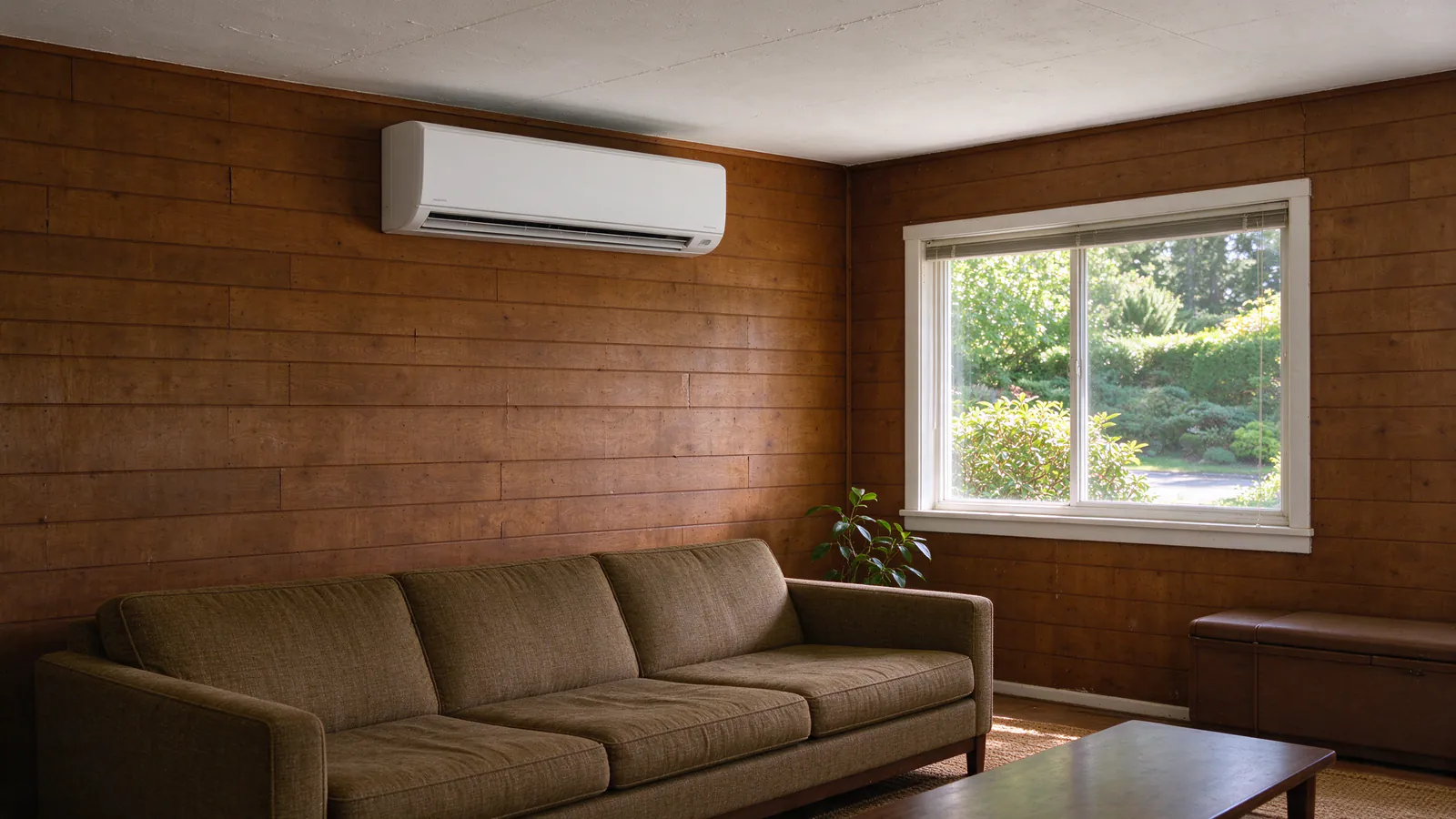
Electric heat, in the ceiling or along the walls
A Gladstone ranch can heat three ways: baseboards, wall heaters, or cables buried in the ceiling plaster. Close to half the homes here heat with electricity, most of them 1960s and 1970s ranches between the two rivers.
Ceiling cable heat is the least common of the three and the one that needs the most care when we drill. Firlands Portland Mini Splits replaces the zones that cost the most with heads, and leaves the rest as backup until there’s a reason to change them.
What a Gladstone ranch usually has
- one heating zone per room, each on its own wall thermostat
- a crawlspace and a shallow attic
- a panel full of 240-volt heating circuits, which frees space when some come off
Project
A typical Gladstone ranch off ceiling cable heat
The problem
Every room heats from resistance cables buried in the ceiling plaster, each on its own wall thermostat. The heat is quiet but slow and expensive, and the house has no cooling. Two of the ceiling zones have stopped working.
The house
Living and dining room across the back, kitchen in the middle, three bedrooms down a hall. Crawlspace below, a shallow attic above the ceiling cables, and a 150-amp panel in the garage carrying a dozen 240-volt heating circuits. Gladstone is PGE territory, and Clackamas County issues the permits after the city signs off.
What we decide, and why
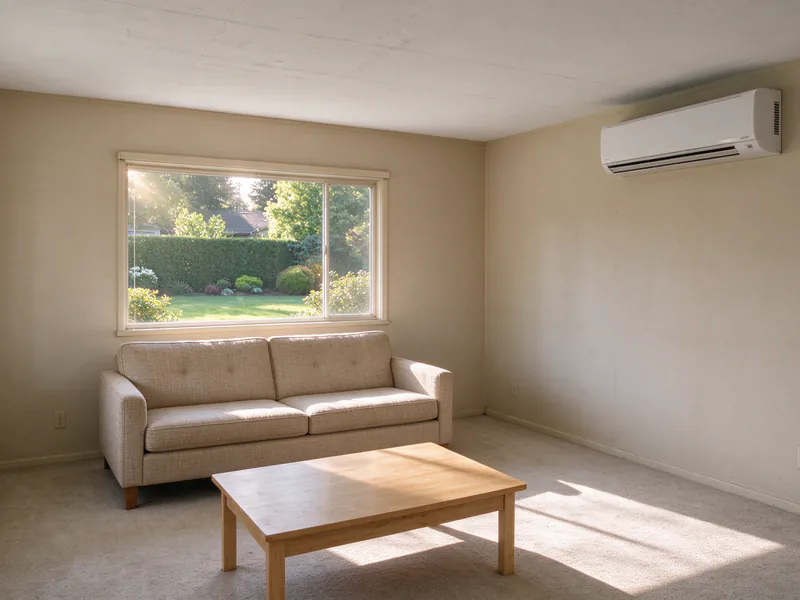
A 12,000 BTU head takes over the living and dining room and a 9,000 the primary bedroom, the two zones that use the most heat and include the two that failed. The two small bedrooms keep their ceiling heat for now. The heads go on outside walls, mounted below the ceiling line, because the cables run within a few inches of the wall edges.
The work
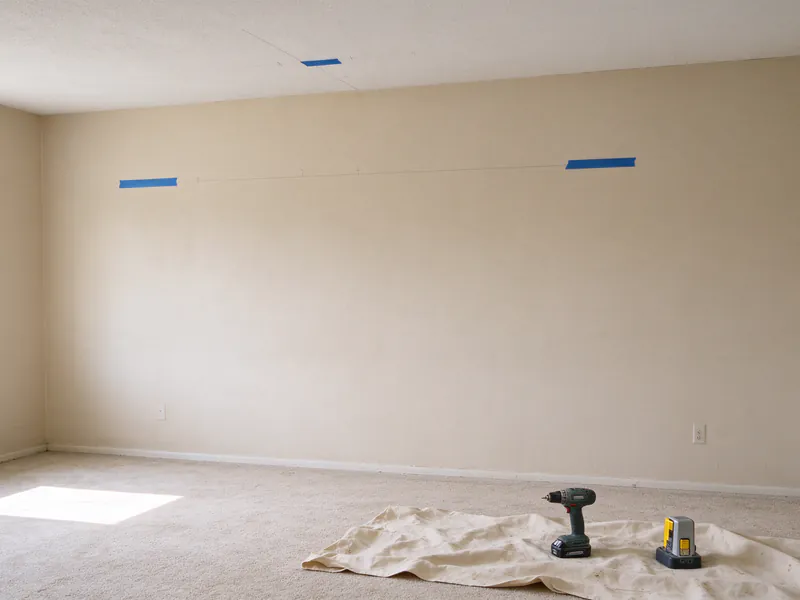
Before drilling anything we scan both ceilings and the top of each wall with a thermal camera while the cables run, and mark where they lie. Two three-inch holes through the outside walls, line sets run along the foundation in one cover to a pad at the back corner, and a 20-amp, 240-volt circuit from the garage panel to a disconnect by the unit. The two ceiling-heat circuits in the rooms with heads come off at the panel and their thermostats are removed and blanked. Each line set holds a nitrogen test and a vacuum below 500 microns.
A screw or a core bit through a heating cable ends that whole zone. Mapping the cables first is what lets the heads and brackets go on without touching one.
What it changes
The main living space and the primary bedroom heat with a heat pump instead of resistance cables, both get cooling, two dead zones are retired instead of repaired, and the owner can apply for Energy Trust's $800 ductless incentive.
- Location
- East Gladstone, near Webster Road
- House
- 1965 single-level ranch, about 1,300 square feet, electric radiant heat cables in the ceilings
- Equipment
- Two heads (12,000 and 9,000 BTU) on one 18,000 BTU cold-climate outdoor unit
- Price
- $10,200, permits included
- Time on site
- 2 days, then the county's final inspections
Working around heat in the ceiling
Radiant ceiling heat is a grid of resistance cables stapled to the ceiling and buried under plaster. You can’t see it, and you can’t drill through it.
How we avoid the cables
- Run the heat. Each zone is switched on until the ceiling warms.
- Scan it. A thermal camera shows the cable runs as warm lines, often within a few inches of the walls.
- Mark and mount. Heads hang on outside walls below the ceiling line; brackets and line sets stay clear of the marked runs.
A cable cut by a screw ends the zone, so we don’t skip this step. The zones a head replaces come off at the panel, and their thermostats are removed and the wall patched.
A city sign-off, then a county permit
Gladstone is one of the Clackamas County cities where the county does all the building work: mechanical and electrical plan review and inspection. The county won’t accept the building application until the City of Gladstone has approved it.
| Step | Who |
|---|---|
| City approval of the application | City of Gladstone |
| Mechanical permit and inspection | Clackamas County |
| Electrical permit and inspection | Clackamas County |
We take care of both steps, include the fees in the price, and close the job with the county’s final inspections.
What the incentive pays here
Gladstone is entirely PGE territory, so Energy Trust of Oregon’s ductless incentive applies whenever a ductless system replaces electric resistance heat in the main living space.
| Your home | Incentive |
|---|---|
| Owner-occupied single-family house | $800 |
| Townhouse, duplex or other attached home | $1,800 |
| Rental, or income-qualified household | $1,800 |
Ceiling cables, baseboards and wall heaters all count as electric resistance heat. The heads need an HSPF2 of 8.10 or better, and the application goes in within 60 days, signed by the contractor. Mini split rebates in Oregon has the full list.
What a heat pump does to the bill
Every kind of electric resistance heat, cable, baseboard or wall heater, turns one kilowatt-hour into one kilowatt-hour of heat.
A cold-climate head delivers two to four times that through most of a Portland-area winter, depending on the outdoor temperature. On PGE’s residential rates, that’s where the savings come from. They shrink on the coldest nights, which is why we size heads at Clackamas County’s 24°F design low. Mini split electric bill shows how to estimate yours.
Manufactured homes
About 6% of Gladstone’s housing is manufactured homes, a higher share than most of the metro.
They’re usually good mini split homes: long outside walls, short line runs and often an electric furnace or baseboards to replace.
What we check on a manufactured home
We check the wall framing where the head and the line set go through, and set the outdoor unit on its own pad or stand rather than hanging it on the home. The home’s electrical service and panel get the same check as any house.
Which rooms, and how many heads
In a three-bedroom ranch we usually start with two heads and a single outdoor unit sized to take more.
- Living and dining space: the largest head, because it runs longest.
- Primary bedroom: a smaller head, and the room that most needs cooling.
- Small bedrooms: keep their own zones until you want more.
How many mini splits do I need? explains when one head covers two rooms, and whole-house mini split covers replacing every zone at once.
Near the rivers: low ground and the outdoor unit
Gladstone sits where the Clackamas River meets the Willamette, and the lots near both rivers sit low.
Siting on low ground
- Standing water. Where a yard holds water in winter, the outdoor unit goes on a stand, not a pad at grade, so the coil and the base stay dry and defrost water can drain.
- Mapped flood areas. If your lot is in a mapped flood zone, the county’s floodplain rules can require the equipment to sit above the flood elevation. We check the map for your parcel before choosing a spot.
- Cold air. Low ground near the river collects cold, damp air on still winter nights, and a unit there defrosts more often. A spot a few feet higher, near the house, helps.
From Meldrum Bar to Webster Road
Gladstone is small, but its houses split into a few kinds of job.
- Downtown and along Portland Avenue. Older houses, some from before 1940, with upstairs rooms and basements; often a single head for the room under the roof.
- East Gladstone and the Webster Road area. 1960s and 1970s ranches on baseboards or ceiling heat, where two or three heads on a multi-zone system carry the house.
- Near Meldrum Bar and the rivers. Houses on low ground, where the outdoor unit’s stand matters most.
Gladstone prices
Firlands’ typical range runs from $4,000 to $8,500 for a single head to $9,000 to $18,000 and up for three or four on one outdoor unit.
Two heads typically cost $6,500 to $12,000. Taking heating circuits off often makes room for the new one without a panel upgrade. After the install, a cleaning and maintenance visit typically runs $150 to $250 for one outdoor unit and one head. Mini split installation cost in Portland breaks down the rest.