If you’re comparing quotes, you may see one that lists a “minor label” where another lists a permit. Is that allowed for a mini split? It is: the City of Portland’s program guide lists mini splits by name. Here’s what the label is, what it changes for you, and how Firlands Portland Mini Splits handles it.
What is a minor mechanical label?
A sticker the contractor buys in advance and uses instead of a regular mechanical permit for certain small jobs. It costs less than a permit because the City inspects only a random sample of label jobs.
The program comes from Oregon law (ORS 455.046) and state rules (OAR 918-100). Portland Permitting & Development publishes the city’s own program guide, most recently revised in November 2024.
Which mini split jobs does it cover?
The City’s list includes two lines that matter here: replacement of mini-split heat pumps, and new mini-split heat pumps in one- and two-family homes. It also lists adding a heat pump to a one- or two-family home.
What it doesn’t cover
- New construction, including an addition that adds floor area.
- Large commercial replacements: over 5 tons of cooling, 400 pounds of equipment or 2,000 cfm of airflow.
- More than one item per label. Each label covers one allowed item on one job.
- Work outside Portland’s permit jurisdiction. A City label is valid only inside the City’s jurisdiction.
How does a label job work?
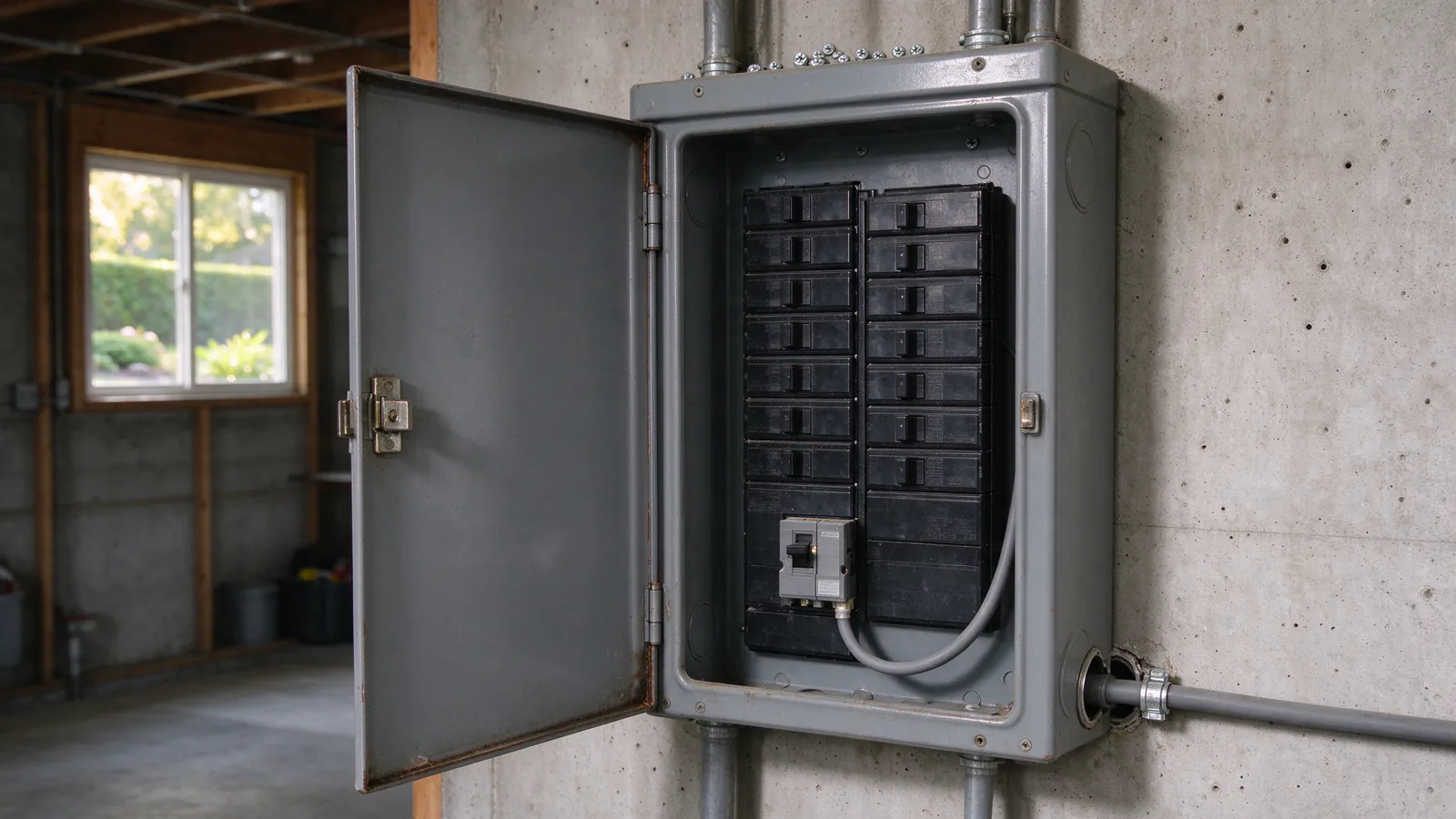
The contractor confirms the job qualifies, fills in the label, sticks it inside the electrical panel at the start, and records the job on a log.
| Step | What happens |
|---|---|
| Before the job | The contractor checks the work is on the allowed list and the address is in Portland |
| Day one | The label goes inside the panel; the job is entered on the log |
| After ten labels or six months | The log goes back to the City |
| Inspection | The City picks one or more jobs from the log at random to inspect |
| A failed inspection | That job needs a full mechanical permit; further failures pull in more jobs from the log |
The contractor is also responsible for zoning: the outdoor unit still can’t sit in the required front setback, and in a side or rear setback it stays five feet tall or less.
Who can use a label?
Only a contractor with a verifiable Construction Contractors Board registration, and only the person who bought the label. You can’t buy one as a homeowner.
The state’s Building Codes Division sells mechanical minor labels and lists new mini splits in one- and two-family homes among the allowed work. If you do your own mechanical work on your own house, the City’s route is a regular permit.
Does a label cover the electrical work?
No. A mechanical label covers the heat pump. A new 240-volt circuit is electrical work, and the program guide notes that other trade permits may still be required.
Most mini split installs need that new circuit. The electrical requirements guide covers what the panel needs, and mini split permits in Portland covers the electrical side in full.
What should you ask a quote that lists a label?
A label is a legitimate route, so the question isn’t whether it’s allowed. It’s whether the quote covers everything the job needs.
- Is the circuit covered? If the job needs a new circuit, ask how the electrical side is permitted and inspected.
- Where does the outdoor unit go? The label doesn’t change the setback rules, and in a historic district the City’s exemptions for ground and rooftop units still apply (placement guide).
- Is it new construction? A head for a new addition or a newly built ADU is outside the label program.
- What gets tested? Ask for the pressure test, the vacuum reading and the drain test in writing, whichever paperwork route the job takes.
How do we handle it?
Our estimates include the city permit fees, and we close the permit with the final inspection. That puts an inspection on record for your house, not just for a random sample of jobs.
Why the final inspection matters to you
- It checks your job. An inspector looks at your outdoor unit, its clearances, the line set and the circuit.
- It’s on record. A closed permit stays in the City’s permit records, where a buyer or an appraiser can look it up.
- It isn’t extra on your bill. The fees are in the price on the estimate.
For a straight swap of an old system, mini split replacement covers what changes and what doesn’t. Our typical ranges, with permits, are in the Portland cost guide, and the installation process guide shows where the permit fits in the job.